

Kimbap is Korea’s most popular on-the-go meal! Learn how to make a classic version at home with this recipe with a step-by-step guide!
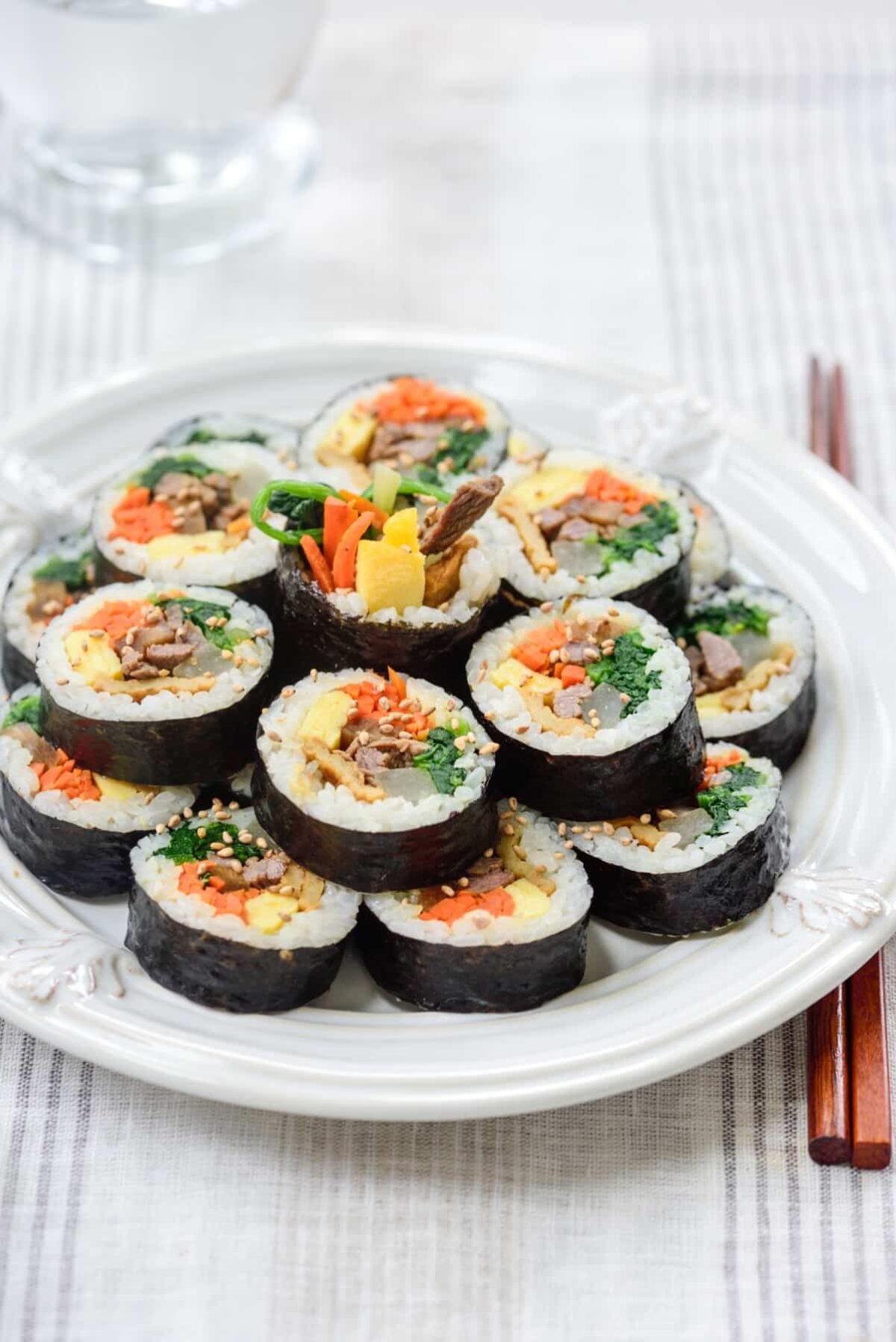
What is kimbap?
Kimbap (or gimbap, 김밥) is a Korean seaweed rice roll filled with a variety of delicious fillings. Gim (김) is a dried seaweed, and bap is rice. With various fillings, these rice rolls have an interesting combination of textures and flavors.
We all grew up on these rice rolls. Our school field trips, outdoor activities, and family road trips wouldn’t have been complete without them! Today, kimbap is the most popular grab-and-go meal in Korea. You can practically find it everywhere with so many variations.
The best one for me, however, is the classic kimbap my mother used to make for us on our field trip/picnic days. I love making these rice rolls at home. It takes some time to prepare individual fillings and rolling takes some practice, but the process is easy and fun.
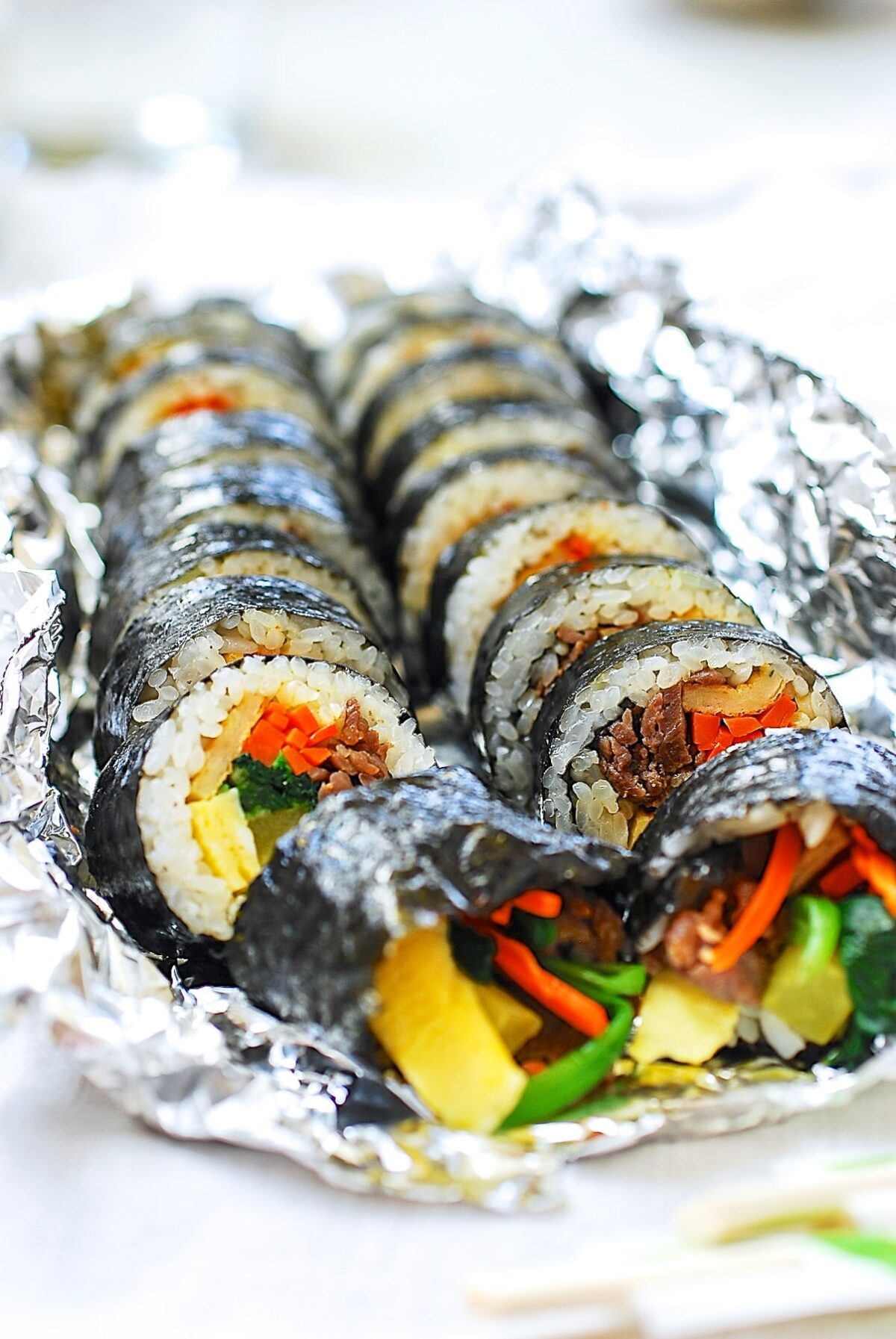
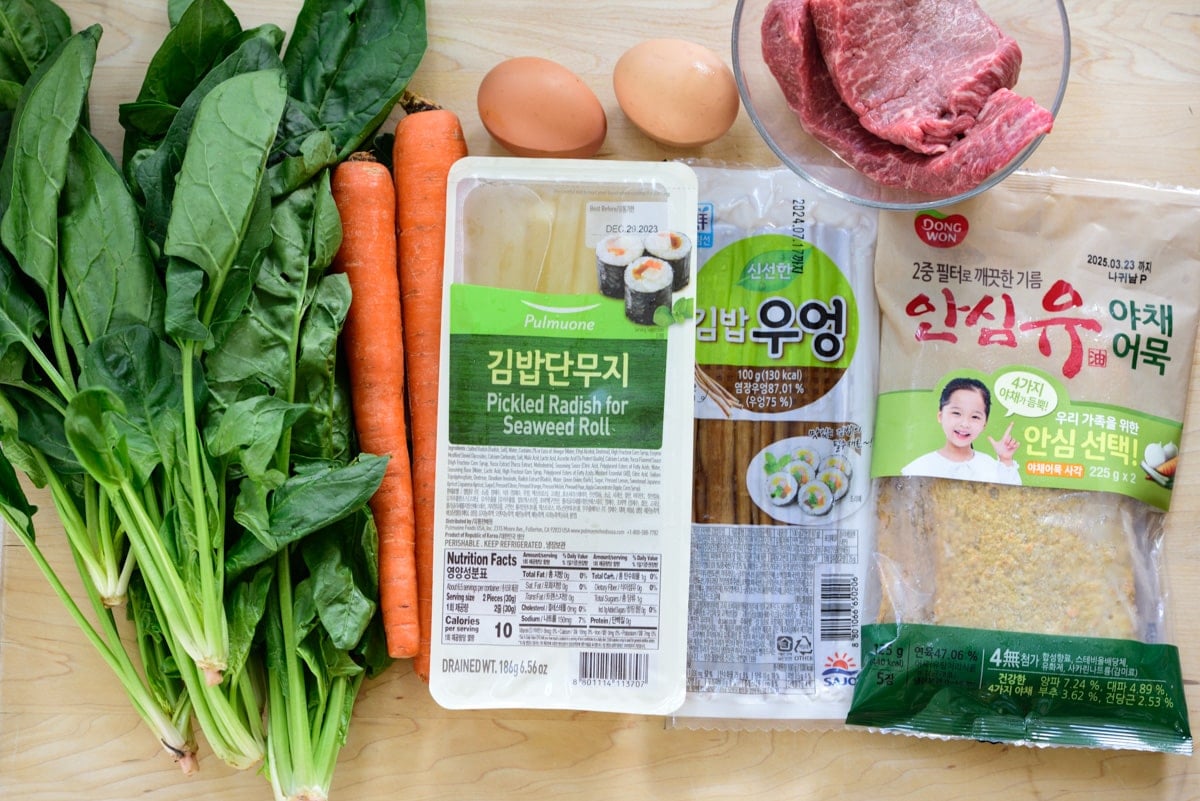
Kimbap ingredients
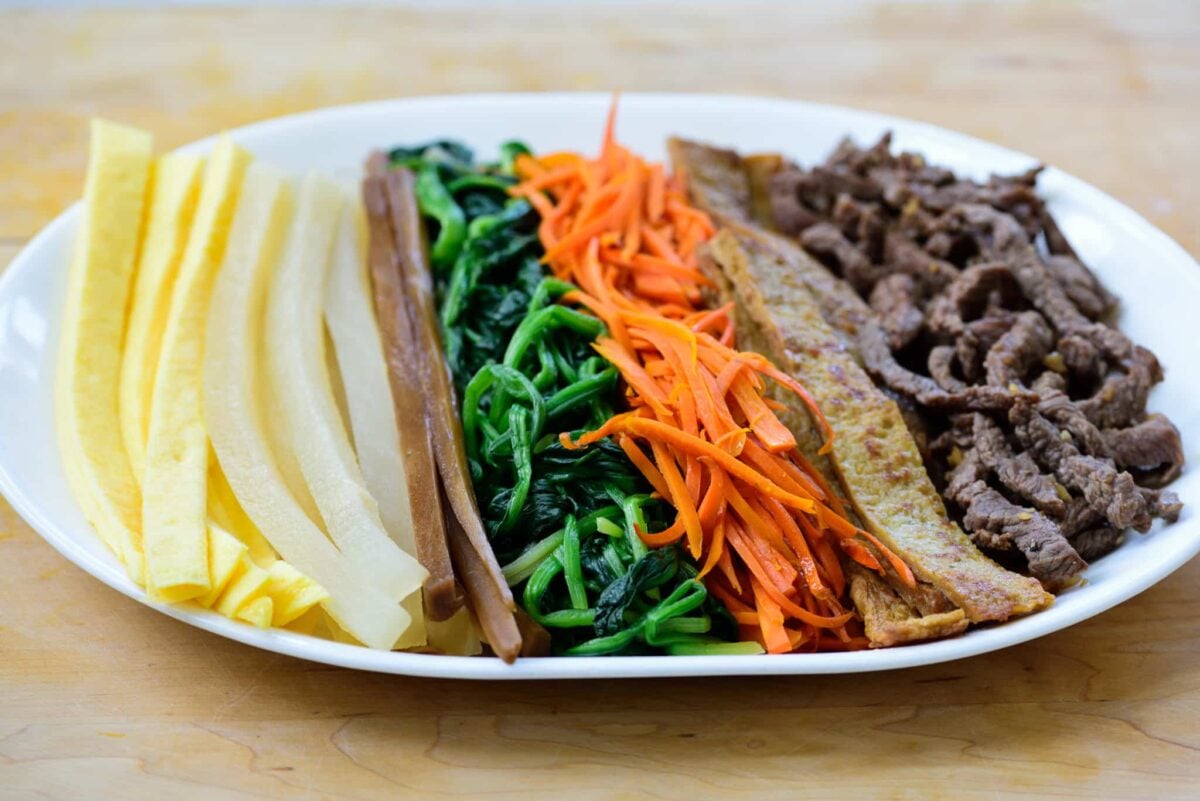
Gim, rice, and some fillings are the three components of seaweed rice rolls. While kimbap fillings are highly versatile with infinite options, I’ve included the classic ingredients in this recipe:
- gim, 김 (dried seaweed, aka nori)
- rice (short/medium grain rice)
- danmuji, 단무지 (pickled radish) – typically yellow but I like white ones without food coloring if available
- beef – any tender cut of beef, bulgogi meat, or ground beef
- eomuk, 어묵 (fish cake)
- eggs
- carrots
- spinach – cucumber is a good substitute. See my Vegan Kimbap for preparing cucumbers.
- burdock root (우엉) – You can usually find packages of burdock root pre-prepared for kimbap usually next to pickled radishes (danmuji). Or, you can make your own, using my recipe.
You can adjust the number and the amount of the filling ingredients to your liking. Omit any ingredient(s) you don’t want or have, and/or add any ingredients you like.
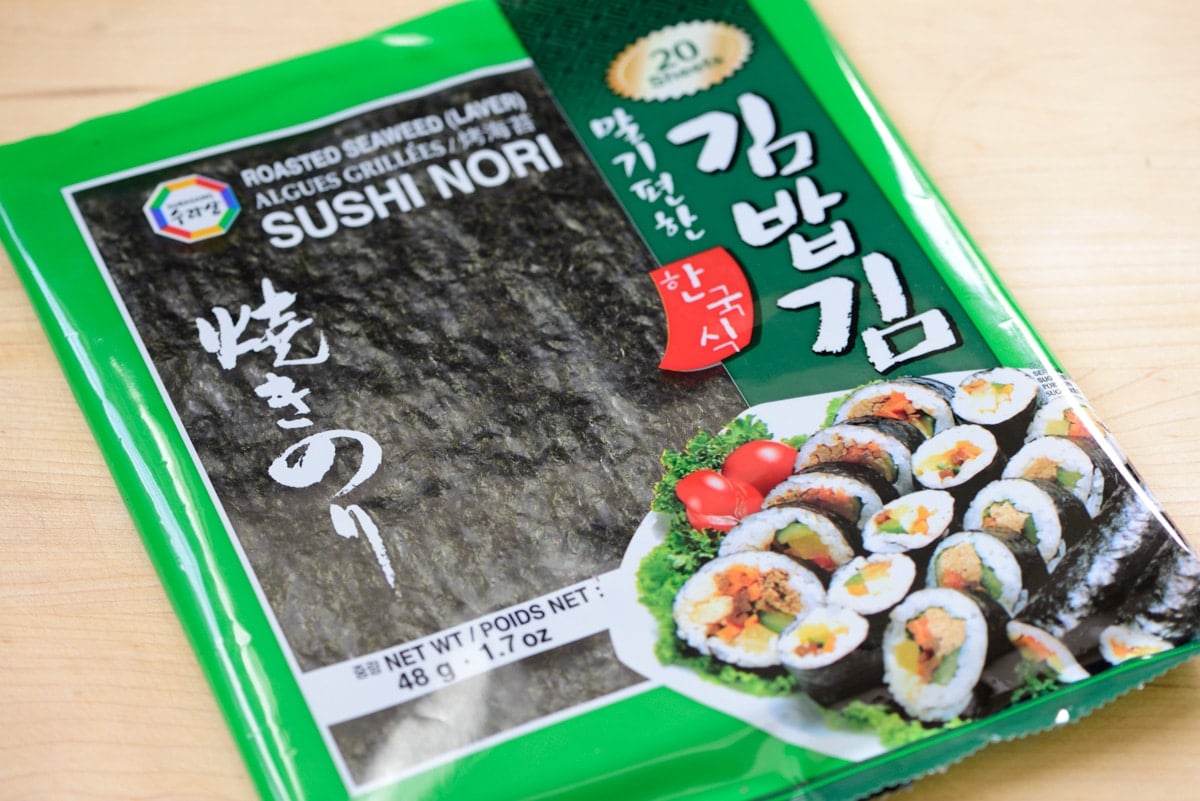
Gim (dried seaweed)
You can find seaweed sheets made for kimbap (or sushi) at Korean/Asian markets or online. They are slightly thick to hold the rice and all the fillings and lightly roasted.
Rice for kimbap
You’ll need short grain rice. For healthier options, I sometimes mix in some brown rice or multigrain rice. Cook the rice slightly drier than normal by using a little less water. Then, lightly season it with sesame oil and salt for a nutty and savory note Korean kimbap is known for.
Each roll takes about 3/4 to 1 cup of cooked rice. For this recipe, I used 1.5 cups of raw rice for 4 rolls. If you cook 2 cups of rice, you can make 5 or 6 rolls.
Preparing filling ingredients
While it takes some time to prepare the filling ingredients, the process is simple. Lightly season each ingredient as all the ingredients, including the rice, will be seasoned. Picked radish and burdock roots are especially salty.
For vegan kimbap, omit beef, fish cake and eggs and add more vegetables, tofu, etc. Also see my Vegan Kimbap.
Variation – Woo Young Woo Kimbap
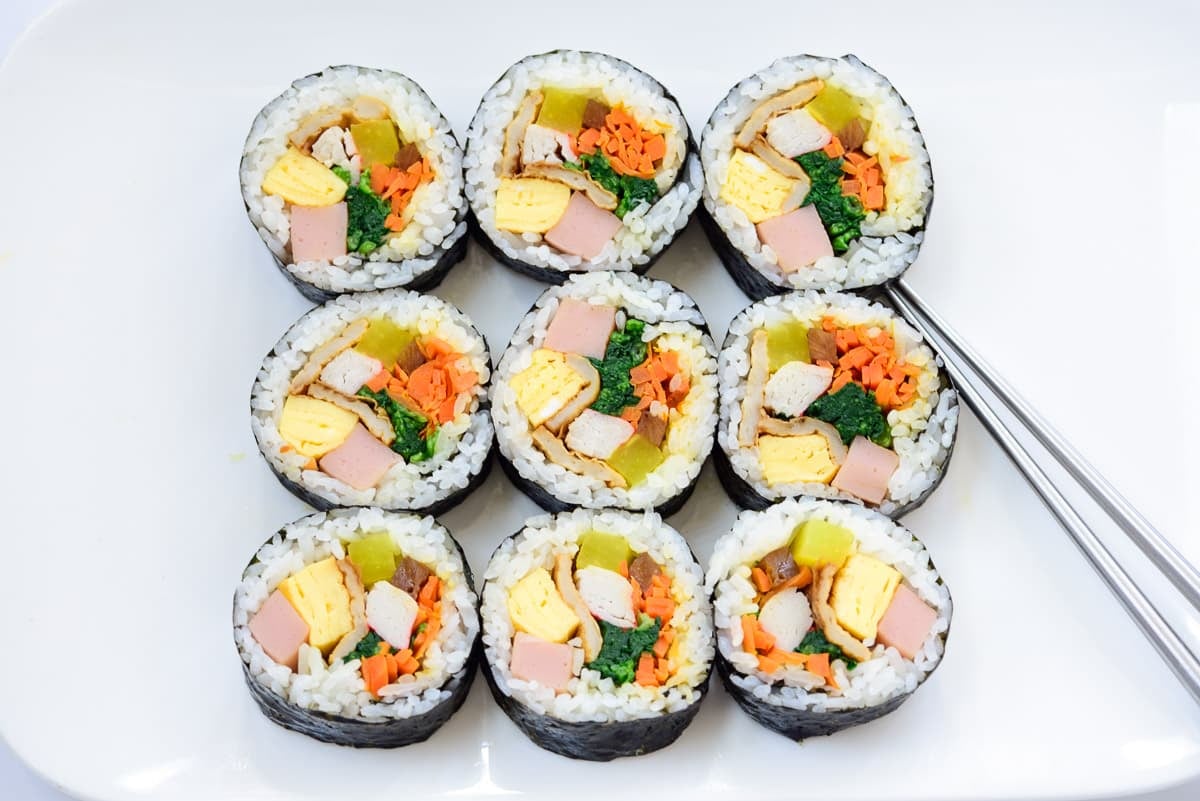
Woo Young Woo kimbap gained popularity on social media thanks to the Netflix Korean drama – Extraordinary Attorney Woo (summer 2022). Woo is a brilliant attorney with an autism spectrum disorder. She loves and eats kimbap for every meal. She says kimbap is trustable. There are no surprises in texture and taste as she can see all the ingredients at a glance.
So, what’s in Woo Young Woo kimbap? Ham, crab sticks, fish cake (eomuk), braised burdock root (ueong jorim), egg, spinach, and carrot. No beef! These are all very common kimbap ingredients. You can easily try this at home by omitting the beef from this recipe and adding some Korean ham (pan-fried) and crab sticks (imitation crabmeat).
Rolling kimbap
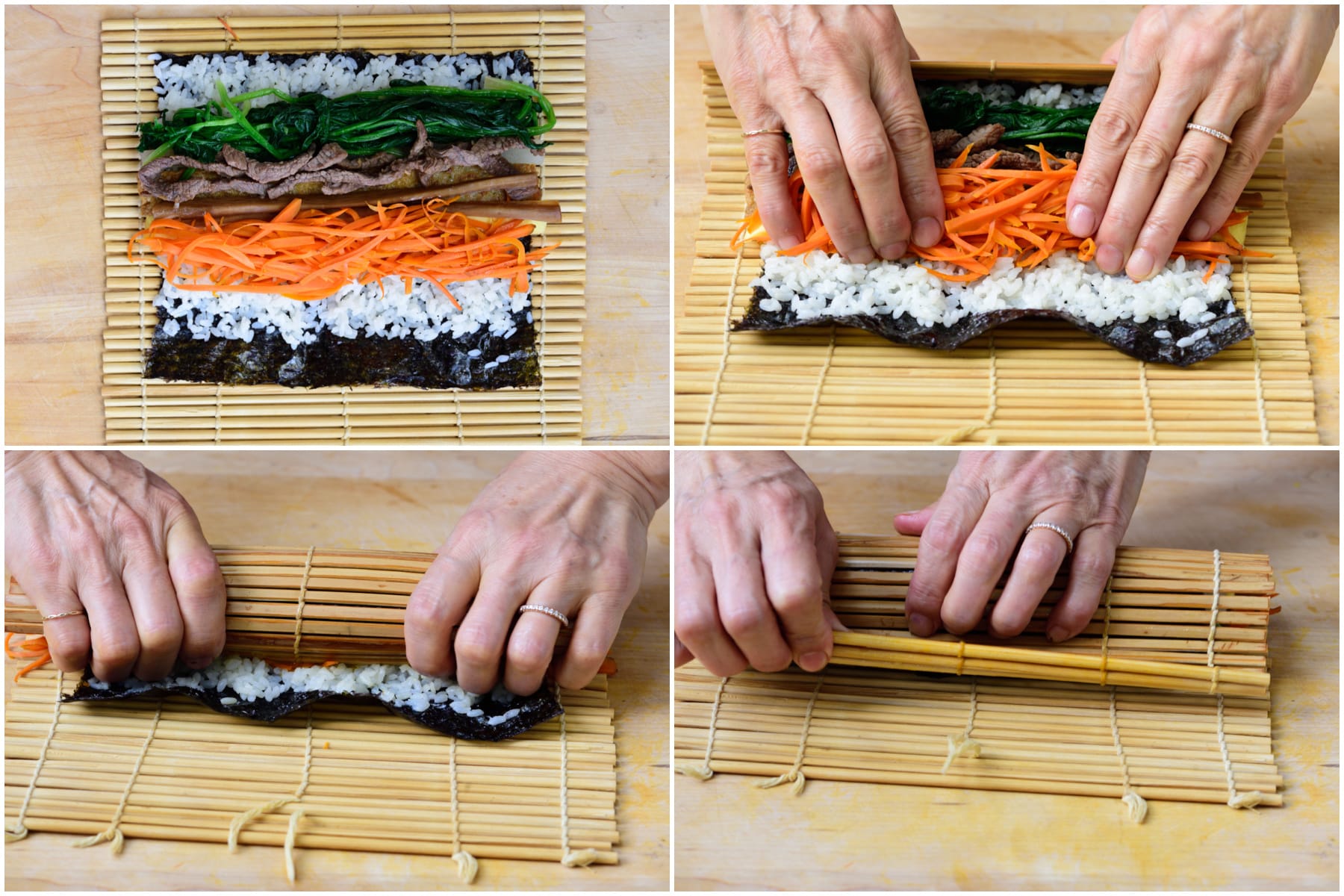
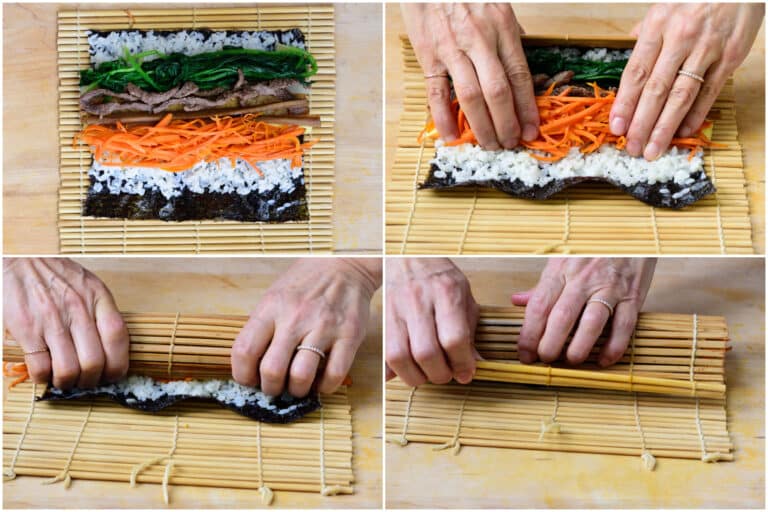
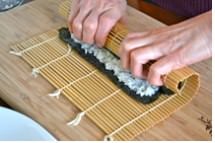
How hard is the rolling process? It takes some practice, but it’s much easier with your second roll. Roll it tightly by putting firm, even pressure with your hands all over the roll. Start with a small amount of each filling if this is your first time.
Tips for making kimbap
- Freshly cooked rice is best for making kimbap. Keep it warm until ready to use.
- Season the rice after all the filling ingredients are ready. Mix the rice with sesame oil and salt while the rice is still hot/warm.
- Keep the filling ingredients as dry as possible by removing excess water.
- Lightly season each filling ingredient. Pickled radish and burdock roots are salty.
- Wet your fingers with water or sesame oil before spreading the rice onto the seaweed to prevent the rice from sticking to your hands. It helps to have a small bowl with water/sesame oil next to your rolling-station.
- Use a sharp knife for cutting your rolls. Make a clean slicing motion and make the full slice in one go. Clean the knife with a wet kitchen towel between cuttings as necessary.
- Store the sliced gimbap in an airtight container. Gimbap is best eaten on the day it’s made, but you can keep it in the fridge and reheat either in the microwave or in a pan. Sometimes, we dip refrigerated gimbap in egg batter and pan fry. A delicious way to revive gimbap!
READY TO ROLL?
More kimbap recipes
Tofu gimbap – vegan gimbap
Mini gimbap (Mayak gimbap)
Tuna gimbap
Folded gimbap
Myulchu gimbap
For more Korean cooking inspirations, follow along on YouTube, Pinterest, Twitter, Facebook, and Instagram.
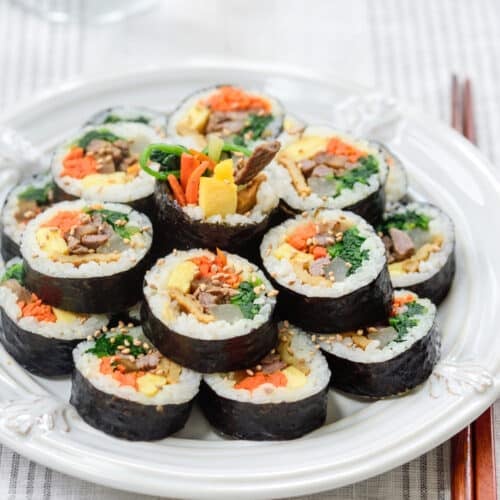
Ingredients
- 4 gim (김), dried seaweed aka nori
- cooking oil
For the rice
- 1.5 cups uncooked short grain rice (standard measuring cup not the cup that comes with a rice cooker) See note 1
- 1 tablespoon sesame oil
- salt to taste (about 1/2 teaspoon) start with a little less
For the beef
- 8 ounces lean tender beef, cut into thin strips (or bulgogi meat or ground beef)
- 2 teaspoons soy sauce
- 1 teaspoon rice wine (or mirin)
- 1 teaspoon sugar
- 1 teaspoon sesame oil
- 1/2 teaspoon minced garlic
For the vegetables
- 1 bunch spinach, about 8 ounces See note 3 for a substitute
- 1 teaspoon sesame oil
- salt to taste - about 1/4 teaspoon
- 2 medium carrots, julienned (or 1/2-inch thick long strips)
- 4 strips pre-cut pickled radish (danmuji, 단무지) strips, white or yellow if not pre-cut, cut into about 1/2-inch thick long strips
- 4 strips prepared burdock roots (ueong, 우엉) Or make braised burdock roots
For the egg
- 2 large eggs
For the fish cake
- 1 or 2 (if small) sheets fish cake - eomuk (어묵)
- 1 teaspoon soy sauce
- 1/2 teaspoon sugar
- 1/2 teaspoon sesame oil
Instructions
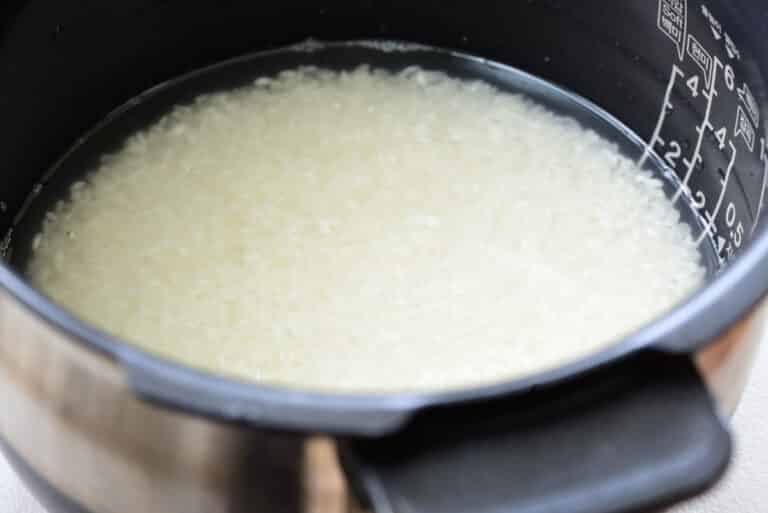
- Cook the rice using a little less water than usual. (Freshly cooked rice is best for gimbap.) Keep it warm until all the filling ingredients are ready.
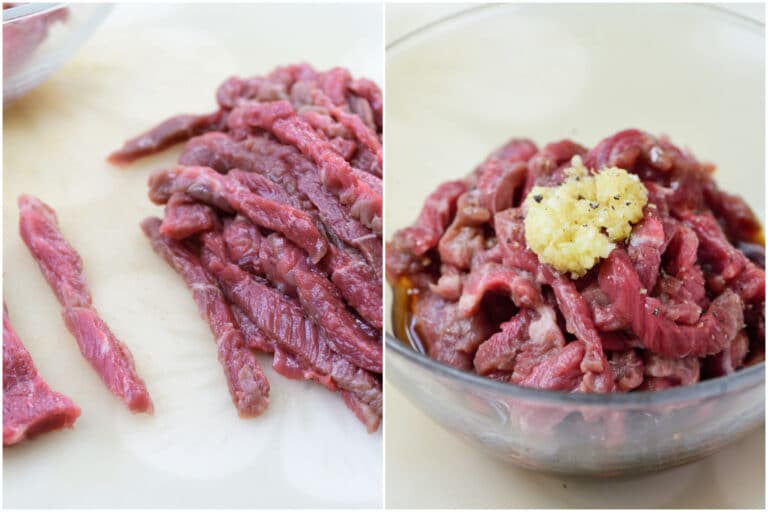
- Cut the beef into thin strips (about 1/2-inch thick). Mix well with the next 5 seasoning ingredients. Set aside.
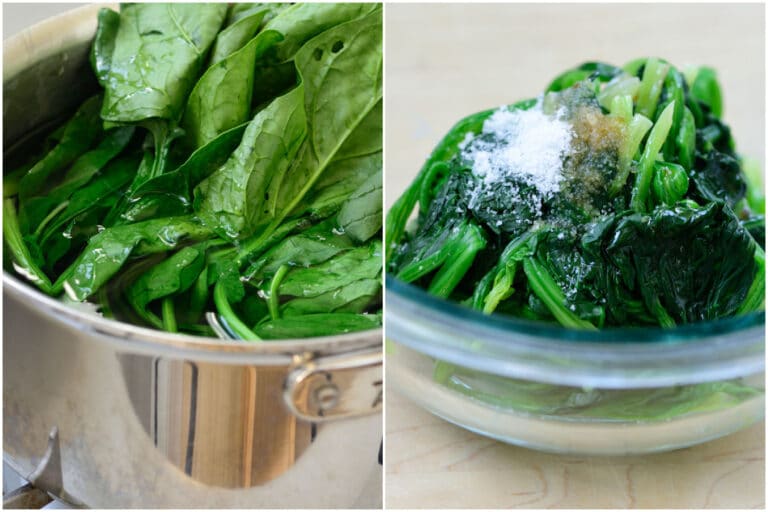
- Bring a large pot of water to a boil over high heat and prepare a cold water bath. Blanch the spinach, place immediately in cold water, then squeeze out excess water. Season with the sesame oil and salt.
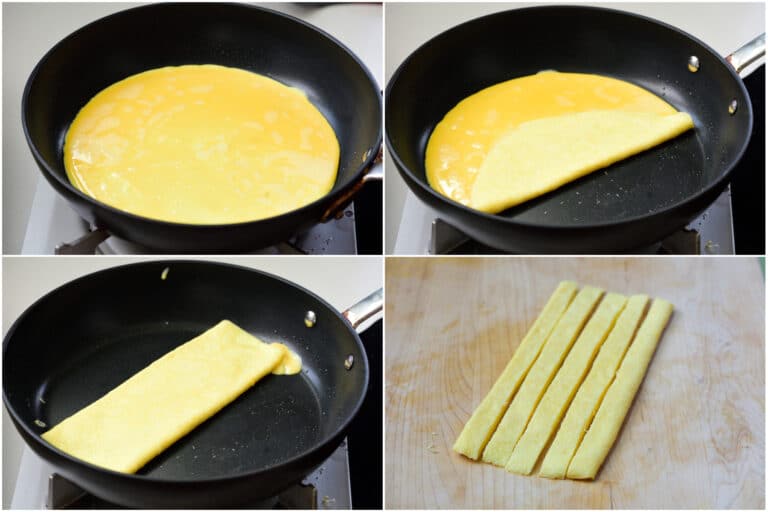
- Crack and beat the eggs, in a bowl with a spoon or a fork. Stir in a pinch of salt. Heat a small non-stick pan over medium-low heat. Add the eggs to the pan. When the bottom is set but the top is still runny, flip it over 1/3 way and again to make a thick omelette. Transfer to a cutting board and let it cool. Cut lengthwise into 1/2-inch thick strips. (You can make a thin, round egg omelette and use 2 pieces per each roll, if it's easier for you.)
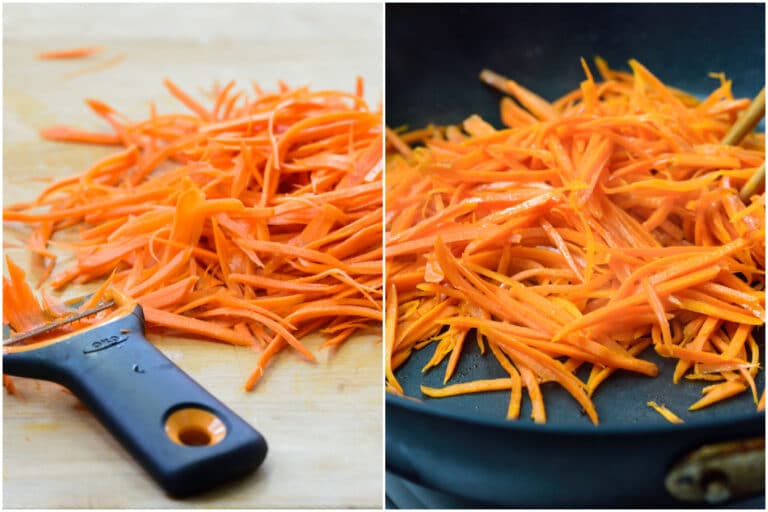
- Julienne the carrots. Heat a lightly oiled pan over medium-high heat. Stir-fry the carrots until softened. Lightly season with a pinch of salt. Transfer to a plate.
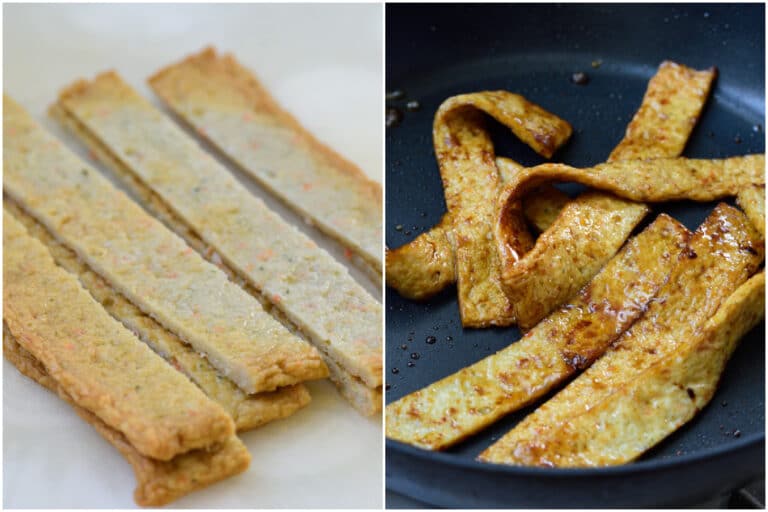
- Cut the fish cake lengthwise into about 3/4-inch thick strips. Heat the pan with cooking oil (about 1 teaspoon) over medium heat. Stir fry the fish cake with the soy sauce, sugar, sesame oil until softened, about 2 minutes.
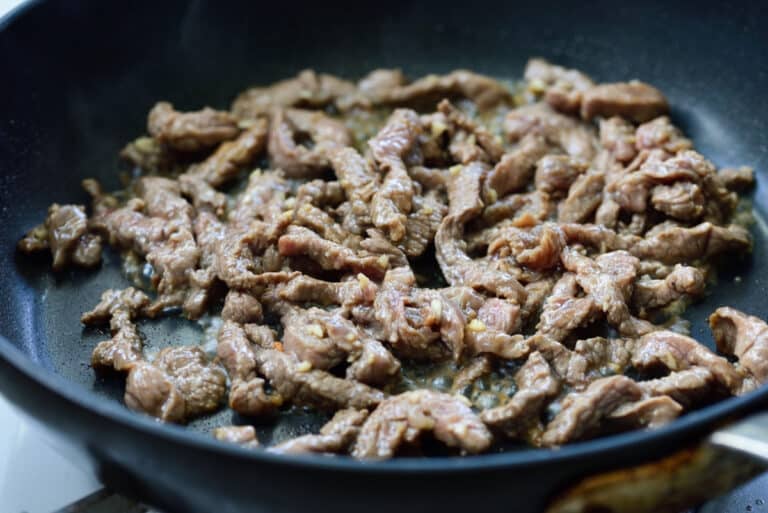
- Stir-fry the beef over medium-high heat until cooked through, 2 - 3 minutes.
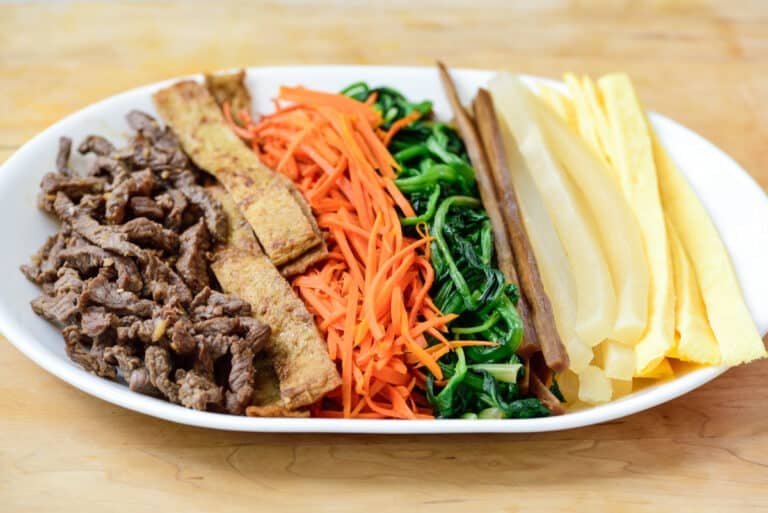
- Arrange all the ingredients together on a plate.
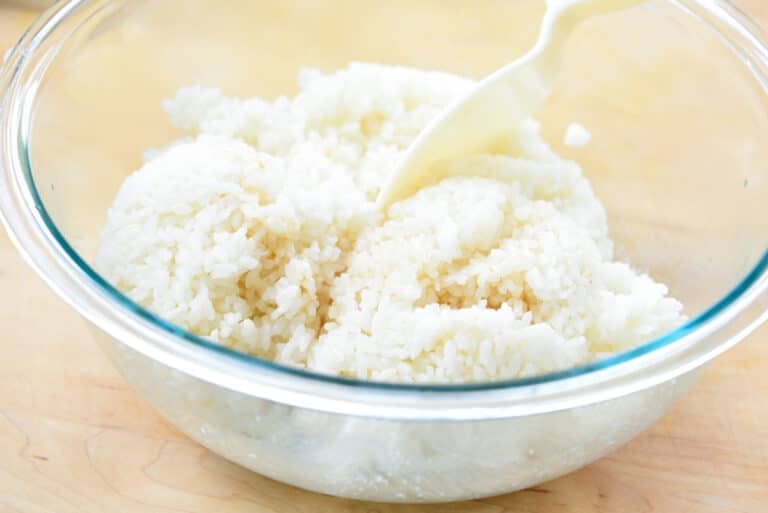
- While the rice is still hot/warm, add the sesame oil and salt. Mix well by lightly folding with a rice paddle or large spoon until evenly seasoned. Add more salt to taste if needed.
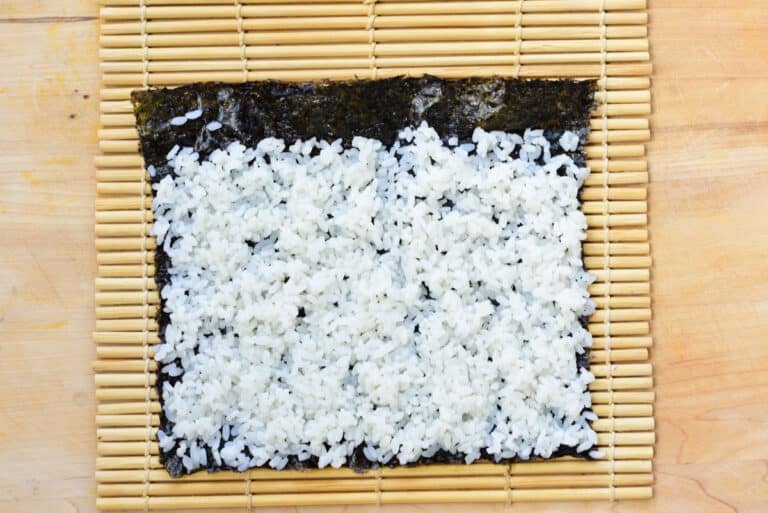
- Put a seaweed sheet, shiny side down and longer side towards you, on a cutting board or a bamboo mat if available. Spread about 3/4 cup to 1 cup of rice evenly over the seaweed, using a rice paddle or your fingers preferably. Leave about 1.5 inch space at the top.
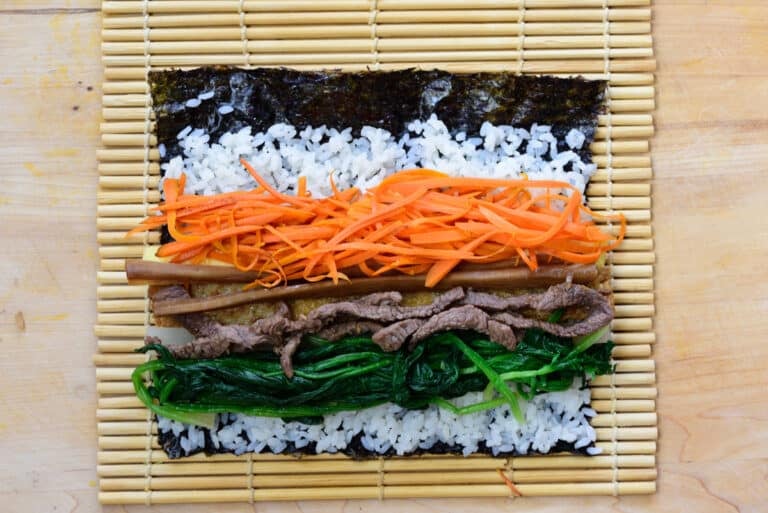
- Lay the prepared ingredients on top of the rice, leaving some uncovered rice at the top for sealing.
- Lift the entire bottom edge with both hands and roll over the filling away from you, tucking in the filling with your fingers. Put firm pressure over the roll with the help of the bamboo mat (or aluminium foil), if using, to close everything in tightly. Then, continue to roll again, putting pressure evenly over the roll using both hands.
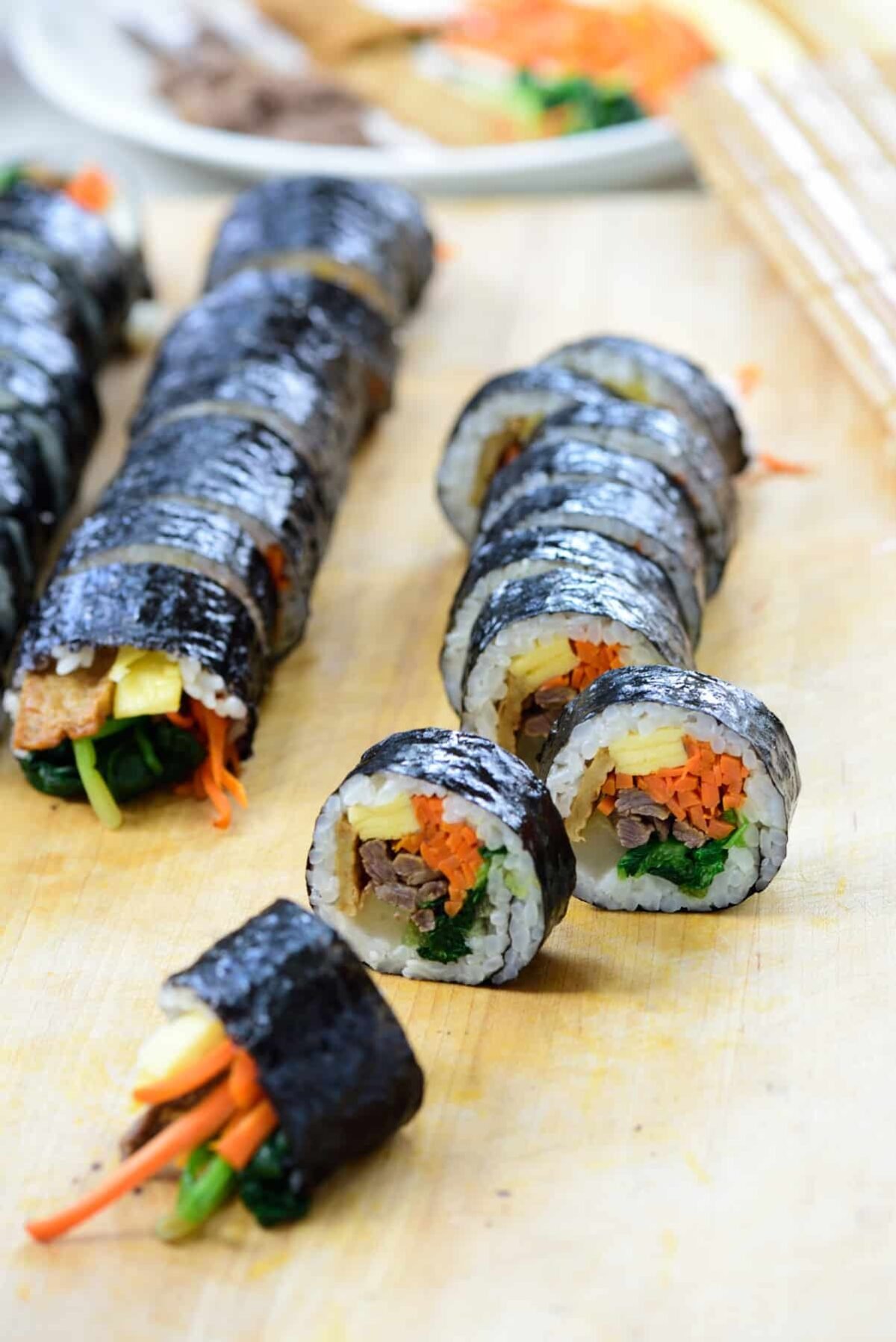
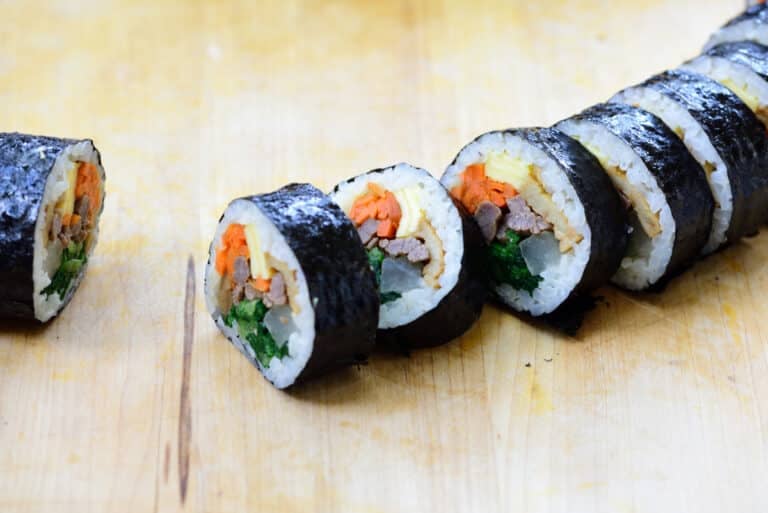
- Rub or brush the roll with a little bit of sesame oil for extra flavor and shiny look. Apply a little bit of sesame oil to a sharp knife. (This will keep rice from sticking to the knife. Repeat as necessary after each cut. Wipe the knife with a damp towel as needed.) Cut the roll into 1/2-inch thick bite sizes.
Notes
- Each roll takes about 3/4 to 1 cup of cooked rice. For this recipe, I used 1.5 cups of raw rice for 4 rolls. If you cook 2 cups of rice, you can make 5 or 6 rolls.
- You can adjust the number and the amount of the filling ingredients to your liking. Omit any ingredient(s) you don't want or have, and/or add any ingredients you like.
- Cucumber is great as a substitute for spinach or as an addition. See my Vegan Kimbap for preparing cucumbers.
This gimbap recipe was originally posted in May 2012. I’ve updated it here with more information, new photos and minor changes to the recipe.















Koreanfoodenthusiast says
Thank you so much for this gimbap recipe, it’s the best I’ve tried so far! Great advice for the seasoning of the various components. I didn’t have the burdock roots so I made the gimbap without them, but it still tasted delicious!
Jennifer Wooten says
I have a fish allergy. Is there something I can substitute for the fish cake?
Hyosun says
You can simply omit it and use more of other ingredients or other proteins of your choice.
Sarah says
Hi Hyosun!
Long time reader, first time commenter 🙂 I’m planning to make this gimbap over the weekend, but I have 2 questions.. First, my local Asian grocery only had pre-fried frozen fish cake. Should I just thaw it and then add it to the roll? Or still fry it a bit to warm it up?
Second, when you’re rolling the nori, do you need to brush water or oil on the 1.5 inch space at the top in order to make it stick to itself?
Thank you for your many many delicious Korean recipes!
Hyosun says
I’d warm it up a bit. You can wet it if you want to, but the moisture from the rice, if using warm rice, will give enough moisture to seal it. Put the seam side down after it’s been rolled.
shonell says
“Kimbap is such a delightful Korean treat! 😍🍙 The combination of flavors and textures in these seaweed rice rolls is just perfect. Thanks for sharing your recipe and the handy tips for making it. Can’t wait to try it at home! 👩🍳👨🍳 #KimbapLove”
Hyosun says
Yes it is! You’re welcome! Can’t wait for you to try it.
woo young woo fan says
I just finished watching the extraordinary attourney woo!, which is why I googled Gimbap to begin with, this looks so tasty but too complicated for my skillset. I will have to find a korean restaurant near me 🙂
I tried korean bbq chicken on a waffle for the first time a few weeks ago and WOW,
Ctoth says
A+++ Thanks you so much for this wonderful recipe with pictures and instructions. I had never had Gimbap before but when I saw your recipe I decided to try making it. I made a ponzu sauce for dipping and my husband exclaimed “write this down so you can make this again”. We both loved it. I appreciated your detailed pictures. I used wax paper when rolling and it worked perfectly. I am excited to try using salmon for a variation.
Thank you
Larissa says
I just wanted to tell you that I love all your recipes. Whenever I am making anything Korean you are my first stop. I have a friend who is from Korea and he was missing food from home . Our small town has no Korean restaurants so I found you and cooked him some 떡볶이 he was surprised and said it was just like his moms . Please keep sharing your wonderful recipes with us .
tara Van Nostrand says
I love your recipes but I was wondering what tools you would recommend making this dish with? I have been trying to buy more traditional tools and make my dishes and I have been having trouble finding a Korean BBQ grill that will go on my gas stove but I know there are kits you can buy to make Kimbap and I just wanted to know your recommendations. Thank you for your wonderful recipes. I love cooking and this is by far the best site for Korean cooking.
Hyosun says
Thank you so much for such kind words!!! You just made my day! hmm all you need for kimbap is a bamboo mat. It’s nice to have, but you can also double the aluminum foil and use it instead.
Victoria says
It looks amazing, I can’t wait to try it. But you mentioned to use less water than normally. How much water do you use?
Hyosun says
Usually 1:1 water to rice. Slightly less for kimbap or bibimbap.
HFB says
I had attempted 김밥 before, but this recipe was a much better one with handy tips and clear instructions. I used ham instead of beef and I didn’t have fish cakes, but did have burdock root, so use that. Super tasty and seems like a way healthier option than the California rolls I was making. DS6 loved being able to eat a whole roll, rather than pieces 🙂
Candice says
I had to make the fish cakes myself since we don’t eat shellfish or other fish that is usually in store bought ones, but now that I have made this once I can easily make it again and again. It’s so delicious and made a perfect lunch!
Tiffany says
My favorite quick snack to have while I’m studying or on the go, thank you so much.
The recipe is so spot on, I got my friends to try it and they love it.
Michelle Yun says
So awesome…thank you
lisa says
Thank you for sharing. What a wonderful dish. We put imitation crab (pollack/fish) on ours. This turned out very well. I like all your tips to help rolling it and placing all the food closer to the beggining roll. Thanks again!
Holly says
Do you send out emails with recipes? I would love to be on a mailing list. Thank you.
Hyosun says
Yes! You can sign up for email newsletters on the blog. It’s on the right side bar if using a desktop or all the way down below my profile photo on the mobile. Thank you!
Liv Rodger says
I wanted to let you know that I love your website and regularly use a number of your recipes. I enjoy cooking and eating food from all over the world, but I have to confess that I only discovered Korean food in the past couple of years courtesy of the boys of BTS. A couple of them have just done a broadcast on gimbap and I am again on your website looking for tips – this recipe and your guidance has been fantastic as always. Thanks for sharing your wonderful recipes and insights, and for helping strengthen my passion for Korean food (isn’t it wonderful how a Korean American can share with a Scotland based Kiwi so easily these days!).
Velva Lynn says
Oh my! Another person who got hungry whilst watching BTS videos? you are my people! That’s how I came to this website and started finding tasty food to cook.
dii says
Me too 🙂 Sometimes I watch Run BTS. And I see some Korean food there. I like to try new dishes. So I heard about gimbap and found this website while researching. Thanks for this very colorful recipe.
Christina says
I also found my way here curtesy if BTS. Namjoon’s craving for hotteok was life-changing. Why do Americans not know about hotteok!? LOL I also have to add, I have a Scottish friend who live half her life (30yrs or so) in New Zealand.
Karen Hwang says
I made these for my husband last week and he will not stop raving about them! Thanks for sharing!!! Your recipe was so easy to follow and they turned out beautifully
Sae says
Your food looks so Authentic. It’s one of the most cultured foods we eat in our home. Other than American. Following you means I can experiment the foods I love!
I’m dying to try these recipes!
Hyosun says
Thank you! Hope you and your family enjoy many dishes from my blog.
Helen Young says
I had some from a restaurant, It had a light spicy taste. loved it. what are ingredients for this spicy taste?
I’m going to try these recipes and would like ingredients for them.
Thank You
Nao says
Hi Hyosun. I decided to enter some diet plan which consisted of 2 boiled egg. Half of white rice bowl and small piece of chicken breast. All this is for 1 day. Sometime I also change the rice to 1/4 boiled potato. I tried it for several days already bit even though I tried this once before, but now I feel so tired at the end of the day. And keep wanting to eat! Maybe it is because my weight is much bigger than that time but still..
Do you perhaps had a healthy but fulfilling meal recipe that helps with losing weight? I would like to lost 1.5kg a day at least if could.
I will be great if I can eat healthy while losing weight with Korean dishes.
Thank you for advice and recommendation.
Chantho says
How do we store the remaining dried seaweed?
Hyosun says
Keep it in a freezer bag, tightly closed, in the freezer.
Ma Recipes says
Hi, I tried this recipe. I made this for my Korean friends and they said it was a little bit bland. However, for me it’s totally delicious. Haha! I made my own Danmuji as the Korean grocery store is far from my house. Hope you can try my recipe too: http://www.marecipes.com/danmuji.
Hyosun says
wow that’s a nice looking danmuji. Nice idea to use tumeric. Did it have the tumeric flavor?
Marion says
Where can I find the pretty red or green square containers?
Hyosun says
The red one is Tupperware, the green one is from a Korean market.
Anonymous says
How do I store leftovers?
Hyosun Ro says
Refrigerate. You can reheat them in a pan over low heat or in the microwave. Thanks!
lina says
hi
thank you share with us the recipe..i hv made kimbap a few time all of my family member love it…
Hyosun Ro says
Hi lina – I’m so happy to hear that. I bet you are getting quite good at it then. Thank you for letting me know how it turned out for you. Cheers!
Anonymous says
Hi! Instead of beef, I want to use this pink sausage that’s sometimes used in this recipe. What is that called and where in the Korean supermarket can I find it? I know it’s not spam.
Hyosun Ro says
It’s a Korean-style sausage (소시지). You can find it in the refrigerator section. Enjoy!
Mee says
Thank you again for a great post!! I used your recipe to make kimbap after so many failed attempts with other recipes. It was the first kimbap roll that my husband said “MAKE THIS AGAIN”. The sesame oil made the rice sooo much easier to work with and so much more delicious. Your pictures were so helpful so my rolls were very tight and beautiful. I made a kimbap version of spam musubi. Turned out really well!!
stella says
This looks really delicious! But I think it’s hard to find the bamboo roll, if that so, is there any other way to roll it nicely without using the bamboo?
Hyosun Ro says
Hi Stella – Yes, you can use aluminium foil. You can fold a large piece in half for durability and use it to roll gimbap. Or use parchment paper. Hope this helps. Happy cooking!
Christina says
Thank you for sharing! My first attempt on Gimbap and I love it! I am so going to try your other recipe! I have linked up your recipe on my blog 🙂 Hope you don’t mind.
Mitchi says
Kimbap!!!!! Aw, super love! It makes me hungry again!!!!!
Rachel {Mother's Mementos} says
So pretty! My mom taught me how to make these using hot dogs, and I love to add a slice of cheese. Eating the “ugly” ends is my favorite part of making gimbap. 🙂
Sook says
Mmm I am craving some Kimbap now!
Corine says
I love the kimbap you made here. I tried to make some sushi rolls myself before, and they aren’t as gorgeous as yours. Thanks for the post. 🙂
Sook says
My favorite!! Kimbap used to be my favorite picnic food (well, it still is). It reminds me of all the picnic trips we went growing up!
Cynthia Antonio says
i was maked like this before,,i was used apple vinegar .. this one just sesame oil and salt.. definetl;y this one is better thanks for sharing ur woderful recipe i will try this surely .
Anonymous says
Faaaaantastic 🙂 Is it ok to use shrimp or lobster instead of beef?
Hyosun Ro says
Of course! It’ll be gourmet gimbap with those ingredients. Thanks!
IkaZuzu says
Annyeong haseyo Hyosun-ssi 🙂
Before I stumbled to this page, my kimbap was never in great shape and makes me wonder why.Thanks for your tips now I know why. lol.
Neomu kamsahae 😀
Anonymous says
nice idea.. thanks for sharing.
Carole says
Great recipe. Would you be happy to put up a link to it in my Food on Friday – Asian Food Series.
Hyosun Ro says
Sure. Thanks!
Jen says
love it with tuna…chamchi kimbap!!! YUMMMM….
Hyosun Ro says
Chamchi is great in gimbap! Thanks!
OCFoodBlogger says
Looks delicious and so convenient because it’s portable.
Hyosun Ro says
Thank you!
Sarah@CrispyBitsnBurntEnds says
Hi,
Just found your blog today. I’ve added you to my blogroll so I can have access to my favorite Korean recipes. I would love to learn recipes from my mother but we can’t seem to find the time to cook together. Anyway, great job and I love your pics. Just on a curious note, what kind of camera/lens do you use and who takes the pics when you are in the shot? Thanks!
Hyosun Ro says
Thanks for the kind words! I use Nikon D80 with a 35mm f/1.8G lens along with a tripod. I take most of the photos myself even the ones with me in the shot (using the tripod and time delayed). However, my daughter happened to be home when I took these photos, so the three photos with my both hands in this post were taken by my daughter. Thanks for adding mine to your blogroll!
Sarah@CripyBitsnBurntEnds says
I don’t know why it didn’t occur to me to use a tripod and time delay. Thannks for the tip!
wok with ray says
I like these rice rolls and it looks very easy to make. Thank you, Hyosun!
Hyosun Ro says
Hi Ray – I hope you try to make them. It’s easy to make. Thanks for stopping by!
Ellena | Cuisine Paradise says
Gosh! I am thinking of making this for a weekend picnic and your post come just in time 🙂 Thanks for sharing such a detail step-by-step Kimbap making 🙂 Can i omit the beef for this?
Hyosun Ro says
Hi Ellena – Of course, you can omit beef. I think I’m going to do a vegetarian version next time. Thanks for stopping by!
Mabel says
These look delicious! I love kimbap. Reminds me of my childhood when I brought it for lunch and everyone ooh-ahhed over it 😀
Now, I love “grown up” kimbap that has seasoned kimchi, perilla leaves and myulchi bokkeum in it. Spicy and delicious. Of course kids don’t like this as much.
Mabel @
mdcooksfor2.blogspot.com
Hyosun Ro says
Thanks, Mabel!I love kimchi and perilla leaves in my kimbap as well. I haven’t had myulchi in it for a long time, but I remember having it when I was growing up in Korea.
Sissi says
Hyosun, I will never be able to make such beautiful, neat rolls like yours. I lack discipline and am too clumsy for this. Your choice of fillings is so colourful and interesting! Even though I have already made rolls with ground beef (horrible photos and clumsy rolls but a wonderful taste!), I would have never thought of thin beef strips. I also love the Korean idea to add sesame oil. I am very curious about the taste, but I have always enjoyed sesame oil… Thank you for the inspiration!
I have never made Korean rolls, only Japanese but I confirm that rolling gets easier and even if one obtains messy, unequal rolls, they taste heavenly, they are healthy and so much better than boring sandwiches. I have been making rolls for several years now and I always take them on long car trips instead of sandwiches.
Hyosun Ro says
Sissi – I’m sure yours look as good. Ground beef is commonly used as well. It will certainly help with rolling if the ingredients are large pieces. It’s delicious with sesame oil. Try it. You’ll like it.
Sissi says
It’s so funny because I had no idea ground beef was used in Korean rolls: I used leftover ground beef and seasoned it in Indian style. It was so good I have been repeating the same seasoning since then.
Next time I have to do it Korean way!
(And yes, they don’t even compare to yours…)
Raymund says
Wow I never knew Koreans have sushi, nice. I love the this
Hyosun Ro says
Thanks, Raymund!
Chung-Ah | Damn Delicious says
You make these look so perfectly! I thought my mom was the only one who could do that!
Hyosun Ro says
Thanks, Chung-Ah!
Pola M says
What a wonderful picnic! I have to try making it!
Hyosun Ro says
Thanks, Pola!
Caroline Foo says
These look nice. I think I will make this for lunch this weekend. Do I need to cook the beef?
Thanks.
Caroline
Hyosun Ro says
Good catch, Caroline! I’ve added a step. Thanks!
Anonymous says
These look awesome. Do you know of a way to make these in advance? My mom says they should never be refrigerated and I don’t have time in the morning to make them.
Hyosun Ro says
Mom’s always right! The rice will get hard in the fridge. These are best eaten on the same day.
Hyosun Ro says
Is it possible for you to prepare all the other ingredients the night before and just make the rice in the morning and roll?
Nami | Just One Cookbook says
I always love Kimbap, and my mom even makes it more frequently than Japanese sushi roll. 😉 I want to make it on my own using your recipe next time!
Hyosun Ro says
Oh I bet your mom’s is delicious! This will be easy for you, Nami. Thanks!
erica says
Mmm, yummy yummy! I have some danmuji in the fridge and now I know how I want to use it next! Thank you for sharing your recipe. I didn’t realize sesame oil gets added straight into the rice–I guess I have been preparing my rice more the Japanese way with vinegar and sugar all this time!
Hyosun Ro says
hi erica – That’s the important part of Korean gimbap – seasoning the rice with sesame oil and salt. Some people add a Japanese twist by seasoning with vinegar and sugar. Thanks!
Soyon says
I was also going to comment about the rice preparation. We always made it with vinegar and sugar and until I read this post and did some google search, I never knew that was not the traditional way to make kimbap. I guess we make it more Japanese style, what with the unarisushi addition, too instead of meat.
Soyon says
Hm, I tried to post a comment, but for some reason, I always have a hard time posting on your blog when using my wordpress credentials. Anyway, just wanted to say the photos are beautiful, not like mine when I wrote up the recipe a couple of years ago. We use spinach, egg, carrot, pickled radish and unarisushi. I can’t remember what we call it in Korean, but they are the fried tofu that you stuff with rice? We cut them into strips and use them instead of meat.
Hyosun Ro says
Soyon – I’m sorry to hear you’re have a hard time commenting. You’re not the only one who said that, but I don’t know how to fix it. Fried tofu sounds good, but I’ve never used in my gimbap. I should try it. Thanks for stopping by!
Biren @ Roti n Rice says
So beautifully done Hyosun! They are so pretty and colorful. I have tasted these and know how delicious they are. Wish I had some now. They look so good.
Hyosun Ro says
Thank you, Biren!
Sandra M. says
I love this with a beef! I never had this kind of rolls before! Awesome job and thanks for sharing gimbap with us!
Hyosun Ro says
Sandra – Thank you! Hope you get to try it one day.These are delicious!
Katherine Martinelli says
Wow I’ve never had rolls like this – it’s like Korean sushi! I would absolutely love this. Great picnic post!
Hyosun Ro says
Thank you, Katherine!