

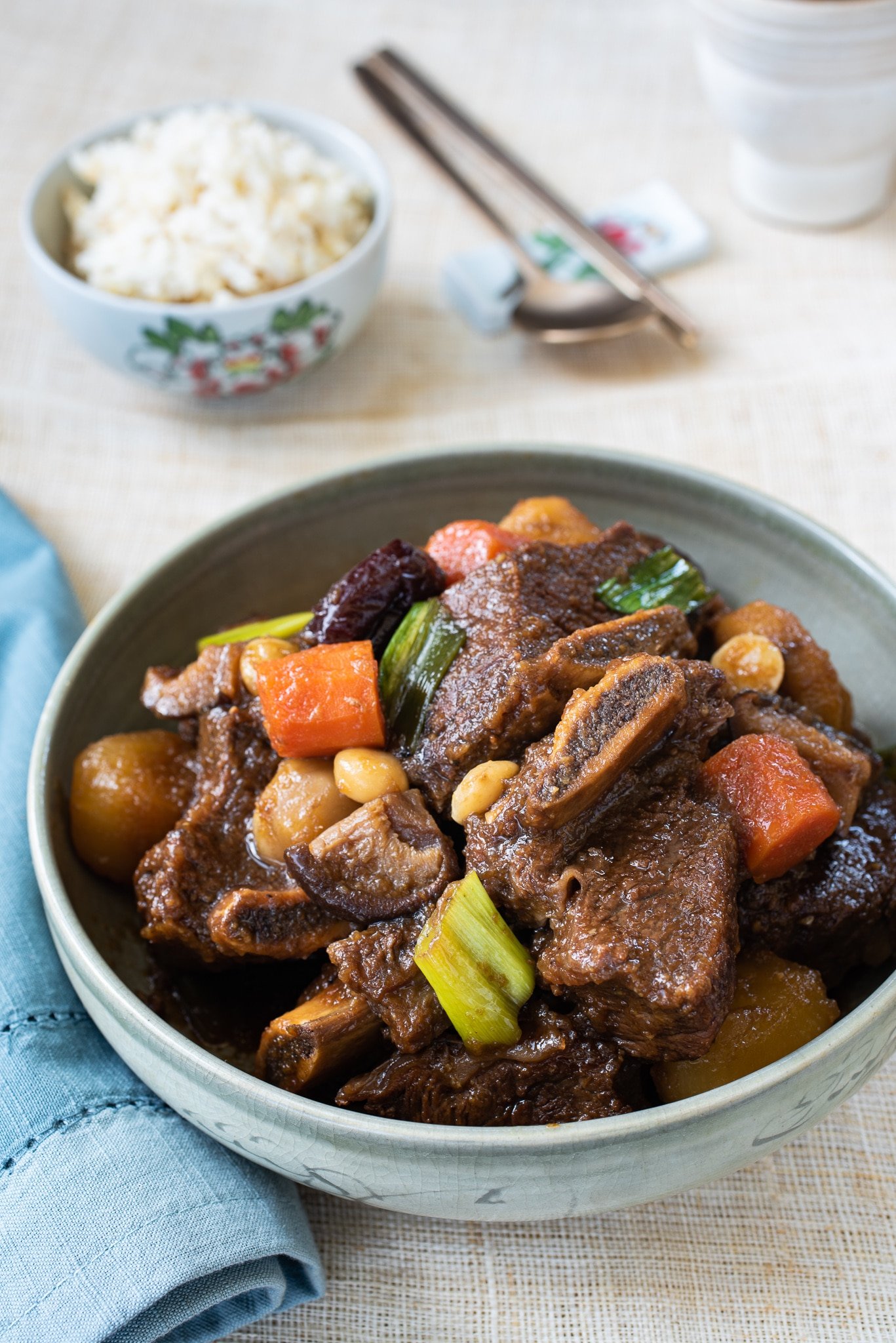
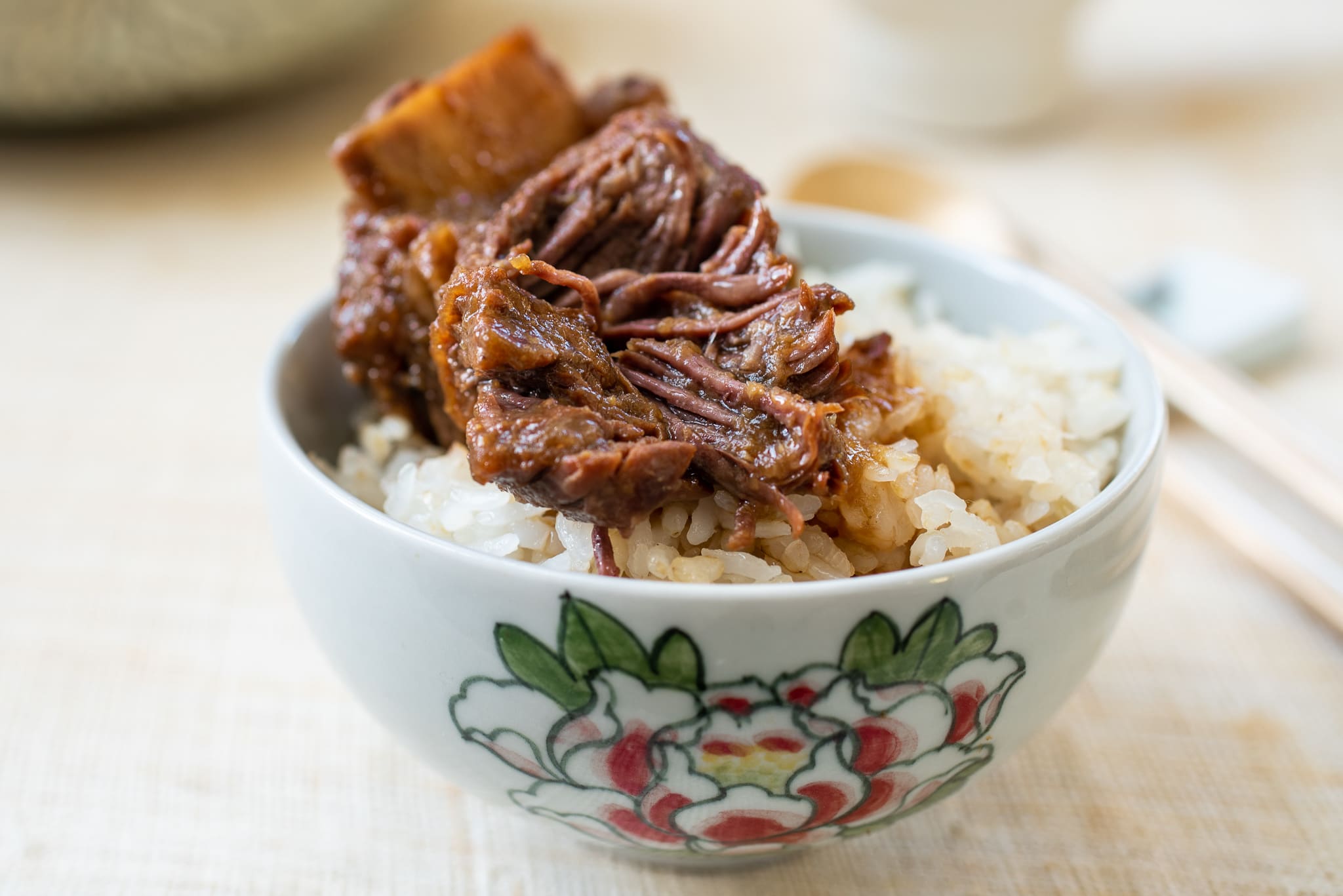
Galbijjim is a traditional braised beef short ribs dish in a rich sauce. You can make these tender, succulent short ribs at home with this easy, authentic recipe!
What is galbijjim
Galbijjim (or kalbijjim, kalbi jjim) is braised beef short ribs, which is typically served on traditional holidays and special occasions in Korea. I make these ribs for my family quite often, especially for my elderly parents. It’s a definite favorite!
I sometimes cook them in my slow cooker or Instant Pot. Here, I’m showing you how to make this dish the traditional way on the stovetop.
Look for short ribs with the most meat and less fat. Traditionally, this dish is made with bone-in short ribs. Although meat cooked on the bone tastes better, use boneless meat if that’s all you can find. Even high quality short ribs will have some fat, which is expected for short ribs. Trim off any thick layers of fat from the short rib, but do not remove the thin, tough skin that holds the ribs together.
Cooking times can vary depending on the size and thickness of the ribs.
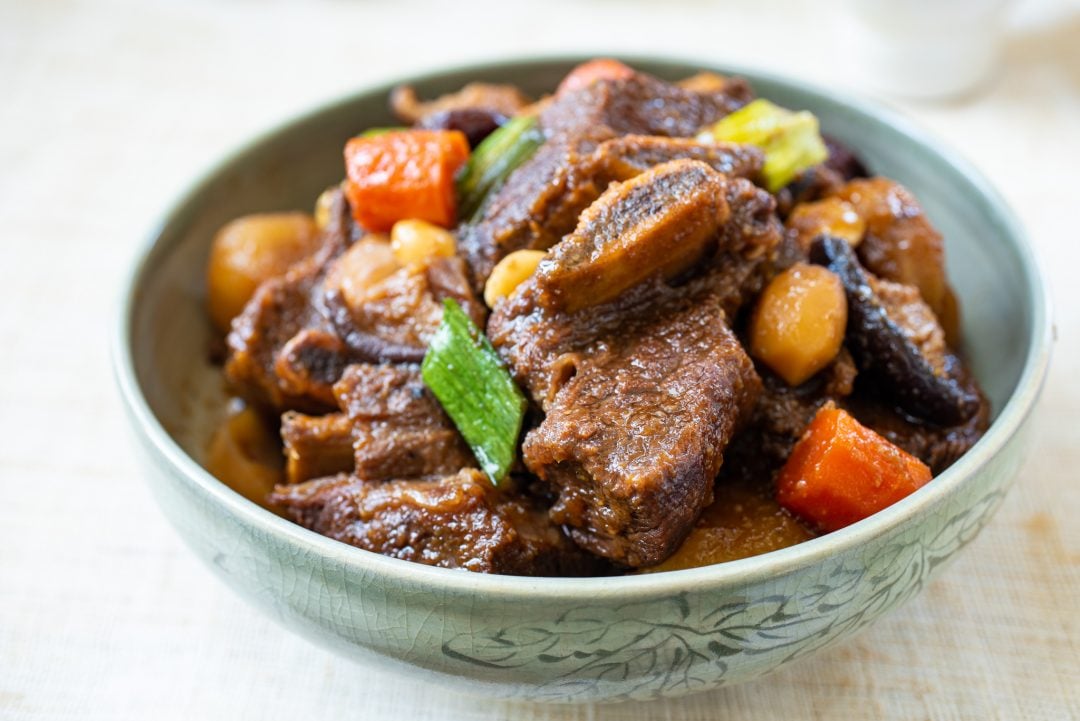
How to make Korean braised short ribs
In contrast to the braising method typical of Western cooking, Koreans traditionally do not sear the meat before braising it.
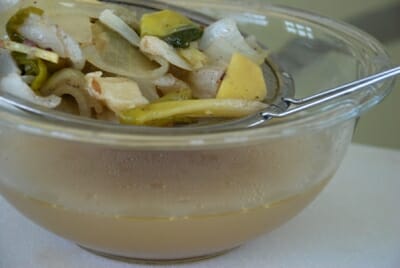
Instead, the ribs are first parboiled in water with some aromatic vegetables before being braised in sweet and savory braising liquid. Parboiling is a technique used to remove excess fat and blood from the ribs. I boil the ribs in a small amount of water and use the resulting stock in the braising liquid after removing the fat.
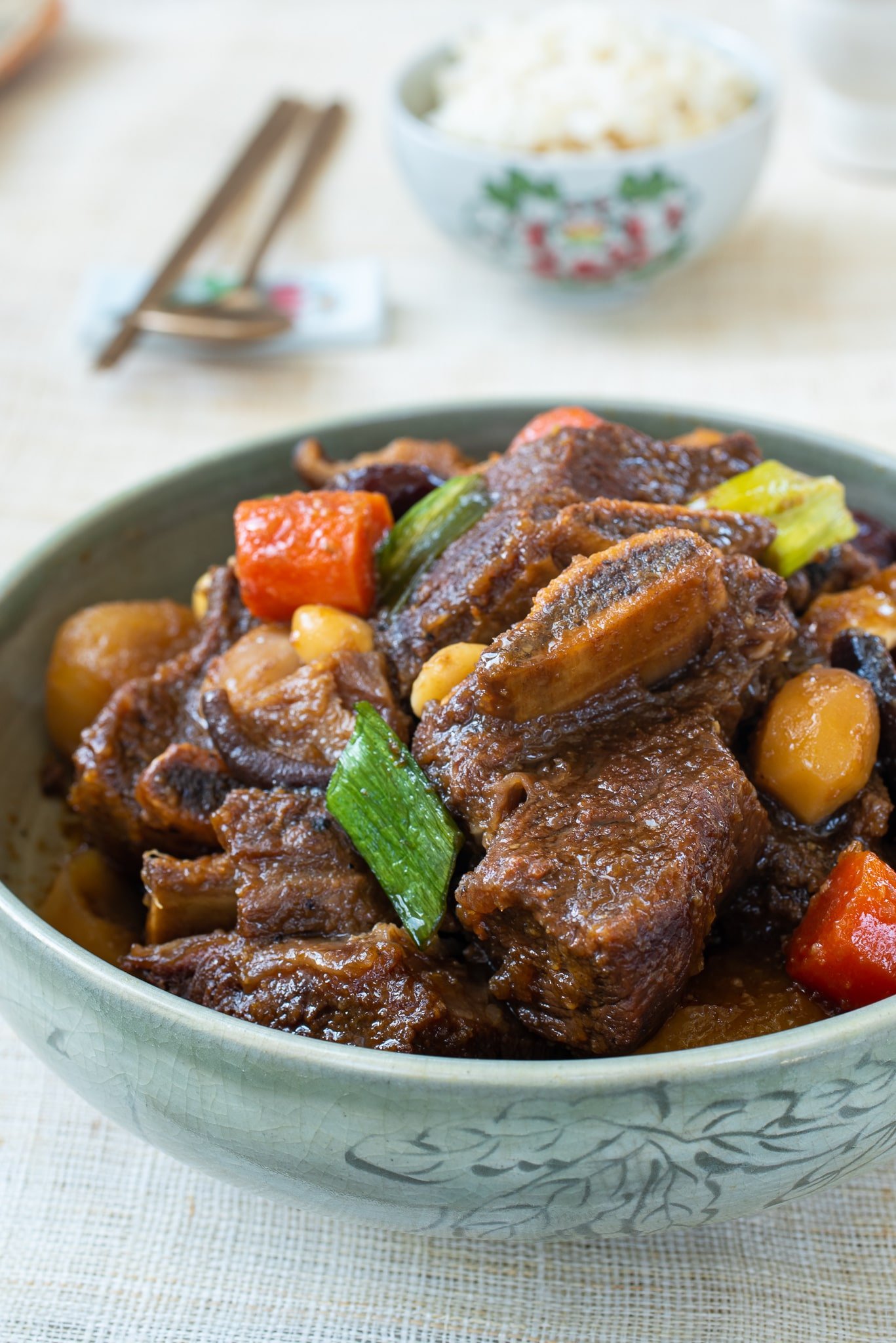
Searing, however, is commonly done in modern Korean cooking. If preferred, feel free to sear the ribs to add that rich browned meat flavor. I do it sometimes as well. The results are equally delicious in slightly different ways.
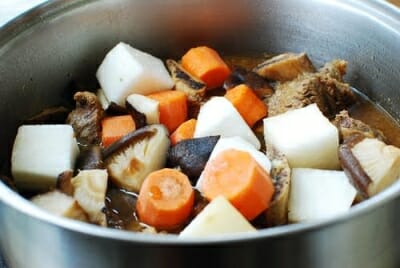
To prevent the vegetables from turning too soggy, I braise the ribs first, and then add the vegetables about halfway through.
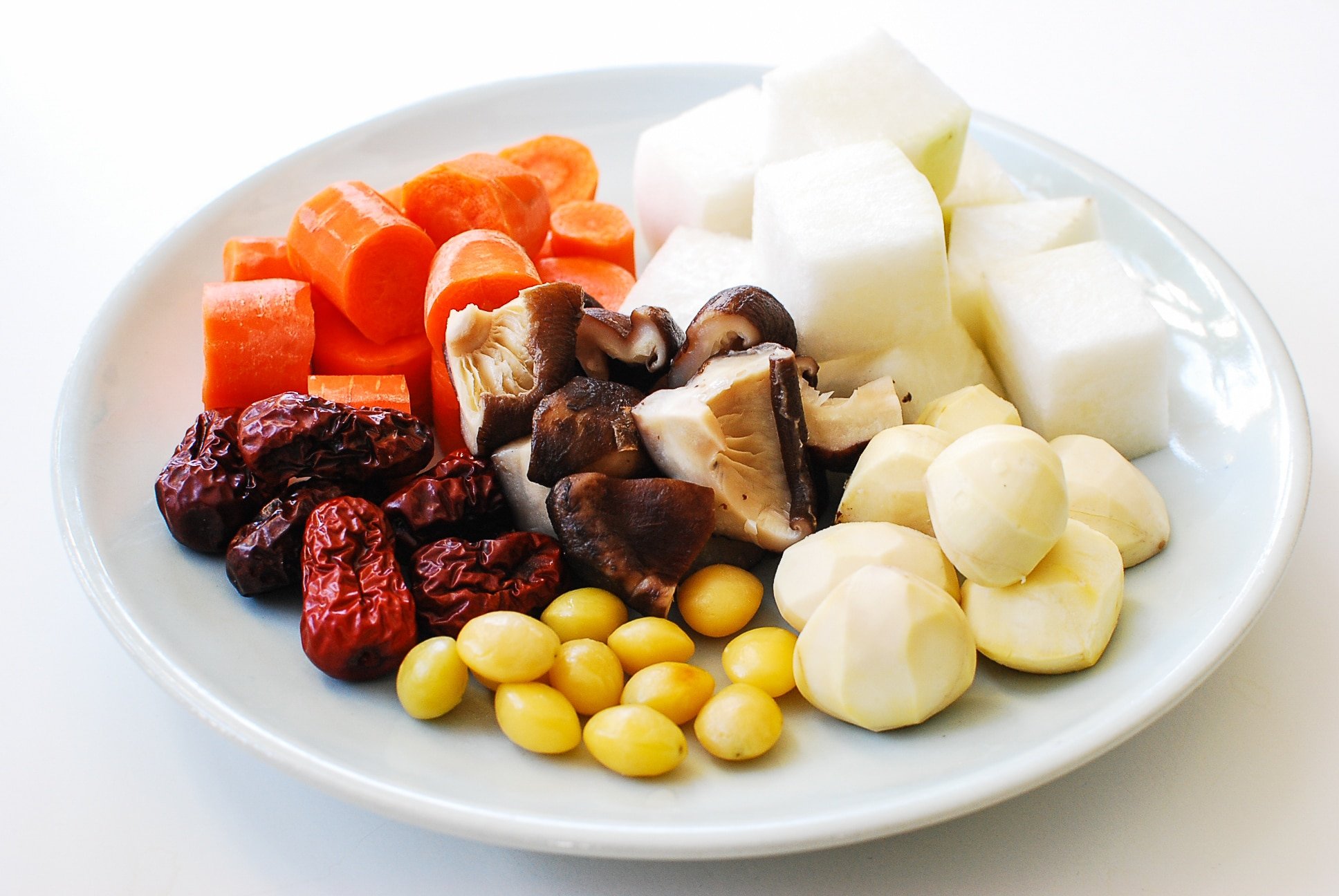
Chestnuts, jujubes, pine nuts, and gingko nuts are customary garnishes that make this dish look very elegant, but the ribs will still be delicious without them if they are unavailable.
These succulent ribs, in a rich sauce, will be perfect for any of your special occasions! Then again, why wait for a special occasion to make this tasty comfort food?
More braised rib/meat recipes:
Slow cooker galbijjim
Instant Pot spicy galbijjim
Slow cooker braised beef shank
Slow cooker spicy braised pork ribs
Instant Pot kkorijjim (oxtail)
For more Korean cooking inspirations, follow along on YouTube, Pinterest, Twitter, Facebook, and Instagram.
Ingredients
- 3 pounds meaty beef short ribs
- 1/2 onion
- 3 - 4 thin ginger slices (about 1-inch rounds)
- 5 garlic cloves
- 2 white parts of scallions
Braising Liquid:
- 1/2 cup soy sauce
- 2 tablespoons sugar adjust to taste
- 2 tablespoons honey
- 1/4 cup cooking rice wine (or Korean matsul/mirim or mirin)
- 1/2 medium Asian pear grated (about 1/2 cup)
- 1/2 small onion grated
- 1 tablespoon minced garlic
- 1 teaspoon grated ginger
- 1/2 teaspoon black pepper
- 2 tablespoons sesame oil
Vegetables:
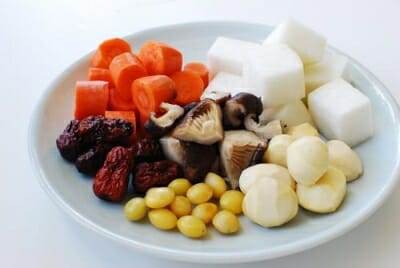
- 10 ounces Korean radish cut into large chunks (about 1-1/2-inch cubes)
- 3 - 4 dried shiitake mushrooms soaked and quartered
- 1 large carrot cut into large chunks (about 1 inch long)
- 2 green parts of scallion
Optional garnishes:
- 6 peeled fresh chestnuts
- 4 to 6 dried Korean dates/jujube
- 10 gingko nuts or 1 tablespoon pine nuts
Instructions
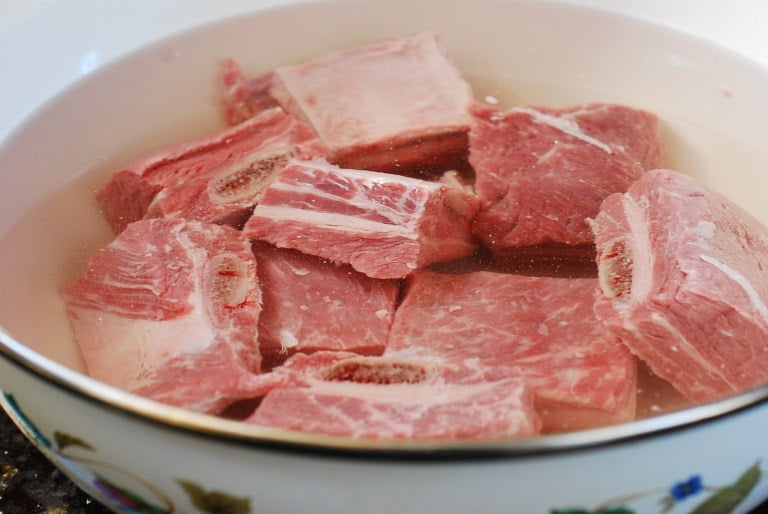
- Trim off any excess fat. Rinse the ribs and let them sit in cold water for about 30 minutes to draw out excess blood. Drain.

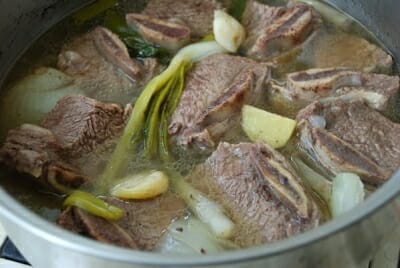
- In a large pot, bring 5 cups of water to a boil over high heat along with the onion, ginger, garlic and scallion white parts. Add the short ribs, and bring it to a boil, uncovered, skimming off the foam. Reduce the heat to medium high and cook for about 10 minutes. Remove the ribs to a plate, reserving the stock.

- Strain the stock, and skim off the fat. (Refrigerating the stock will help the fat solidify for easier removal. If you have room in the freezer, the process will go faster.)
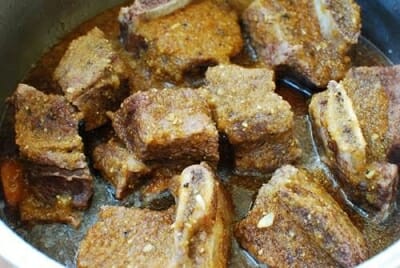
- Mix together all the braising liquid ingredients, except the sesame oil. Return the ribs to the pot. Pour the braising liquid over the meat and stir. (You can prepare the ribs up to this point the day before, and finish braising when you need to serve.)
- Meanwhile, prepare the vegetables and optional garnish.
- Add 2.5 cups of the reserved stock to the ribs. Cover and bring it to a boil over medium heat. Continue to boil for 20 to 30 minutes, depending on the thickness of the ribs. Stir in the radish, mushrooms, and carrots. Continue to boil, covered, for about 20 minutes.
- Stir in the optional garnish ingredients. Return to boil, uncovered this time, for an additional 10 minutes, or until the sauce is thicker and the meat is tender but not falling apart. Add the green parts of scallions and the sesame oil and stir gently before turning the heat off.

















Craig B says
Great recipe. I cooked it mostly as is, except I used fresh shiitake mushrooms, double the carrots, and daikon instead of Korean radish. Also, 3.5 hours in the oven at 300 F, and it was a great Sunday dinner. Quite easy to make, you’d probably be able to replicate it in a slow cooker during the week.
We had this with a large amount of kimchi and rice.
Hyojung says
Question! Can I use country style pork rib instead of beef?
Hyosun says
Yes you can. Please modify cooking time based on the size/thickness of the ribs. I also have a spicy version of pork ribs (baby back ribs) if you like a spicy seasoning:https://www.koreanbapsang.com/slow-cooker-korean-pork-ribs/
Anonymous says
the recipe part about the braising was not exactly clear the taste was a winner winner chicken dinner
Starii says
If I can’t find the Asian pear what can I use as a substitute?
Hyosun says
You can use a bosc pear or an apple.
Starii says
Okay thank you! Also I was wondering about step 4 do I start cooking the ribs in just the braising liquid or do I start cooking the ribs when I add in the stock?
Tim says
This recipe is absolutely fantastic! I’ve made it twice so far. My only alteration is to reduce the amount of toasted sesame oil added at the end – Two tablespoons was a bit overpowering but two teaspoons was perfect.
Jessica Oh says
Under braising liquid ingredients, and then under the minced garlic the recipe says “1 teaspoon grated”, is there an ingredient name missing there?
Hyosun says
Sorry that’s ginger. It’s been fixed. Something must have happened there in one of the updates.
Nobuko says
I’m planning to make this dish tonight because it looks amazing but Under the brazing liquid list after the ingredient minced garlic it say “1 teaspoon of grated” and there is no ingredient. Is there another ingredient supposed to be there?
Hyosun says
Sorry something must have happened. It’s been fixed. Thanks!
Luke Stone says
Could I make these with this sliced short ribs, about thick?
Hyosun says
Yes you can, but reduce the cooking time, depending on how thinly they are sliced.
Bill says
First time and it came out great! Meat fell off the bones and the flavor was wonderful! Thank you!
For my taste, it seemed to want a little more acid to balance the sweet and the really mellow tastes of the meat. Perhaps I undershot one of the ingredients? Or maybe a side of kimchi could provide the balance. Either way, not complaining in the least. It really was delicisoul.
Leonard S says
The recipe says grated onion for the stock but the pictures show sliced. For a stock I don’t think it’s necessary to grate an onion.
Hyosun says
The recipe shows grated onion under the braising liquid, and the pictures you’re referring to are related to par boiling of the ribs. Hope this clarifies.
Larri says
Made this tonight and it was delicious! Will be making this often thank you!
Hyosun says
Awesome! Thank you for letting me know!
Becca says
I absolutely love this recipe- have made it several times now! What else do you like to serve it with? So far i have been just doing rice and kimchi, but i thought there may be some other side dishes that would be good too. What are your thoughts?
Hyosun says
oh glad to hear that! any vegetable side dishes will be great. See my 15 Korean Vegetable Side Dishes post.
Frederick says
I made this the other day and it was delicious. I streamlined it a bit and cooked everything together as in your hot pot version and it came out great. Put quite a bit of the beef stock in after boiling it and cooked it down for 1.5 hours to a tender tasty hearty stew. Next time I’ll make it a spicier as per your other recipe.
Frederick says
delcious. first time trying this, tweaked it a little and it was great. so happy
Bernadette says
I’m having a difficult time finding raw peeled chestnuts, will roasted work in this dish?
Hyosun says
You can simply omit it, or roasted chestnuts should be good too.
AK says
Why isn’t the meat seared for a Maillard reaction to deepen the flavour?
Love the recipe but might try doing that next time!
Hyosun says
Koreans traditionally do not sear the ribs before braising them. Instead, the ribs are first parboiled in water with some aromatic vegetables before being braised in sweet and savory braising liquid. It’s just a different cooking technique, although searing is common in modern Korean cooking. I wrote about this in the narrative above.
Rbar says
Can I substitute fresh Shittake mushrooms for dried? If so, do they need to be cooked before adding to pot? What about the lack of soaking liquid?
Will rate once I make it.
Hyosun says
Yes you can. No they don’t need to be pre cooked.I wouldn’t worry about soaking liquid. Hope this helps.
Linh says
I made a mistake and accidentally added sesame oil to the braising liquid. Can I still use it or start a new batch of braising liquid?
Hyosun says
You can still use it! It’ll be delicious.
gail says
Love this recipe! I’d like to try searing the meat next time. Is this done before parboiling?
Hyosun says
If you’re searing, you don’t need to parboil. Sear the ribs and follow the braising steps. Enjoy!
Angie says
I made this recipe and it tastes superb. I’m glad I saw your website. I brought some to our small gathering and everyone loves it. Thank you.
Patricia says
Hi, are sesame seeds added to this recipe? We don’t have Korean radishes so I intend to use potatoes instead. I would appreciate additional tips for a richer, creamier sauce. And more sauce at that. We like it with rice. Thank you!
Hyosun says
Hi Patricia – You can use sesame seeds if you want but not necessary. This recipe should give you a good amount of sauce at the end, but use more (a half cup to a cup) reserved stock in step 6.
dany says
Hi!
Could this possibly work with beef brisket? Short ribs are usually very expensive and I already have some beef brisket in my freezer!
Lynn says
Hi, I’m so glad I found your blog! I really miss my food trips to Korea now that we can’t travel. My favourites Galbi Jjim restaurant is near Seoul university and they do a fried rice dish with the remaining sauce in the hot plate with some pickled vegetables. The bottom is crispy and the rice soaks up all the beef flavours. Do you have a recipe for that?
Lindy says
I made this for the first time today and I LOVE it! It’s so delicious. I’m wondering what’s the best way to store the leftovers to eat the next day? Is it best to refrigerate the whole pot, or to transfer to glass Tupperware? Does it need to just be microwaved or heated over the stove? Thank you!
Hyosun says
All of the above! But, the whole pot will unnecessarily take up your fridge space. I normally transfer leftovers to a smaller pot or glass container. You can do either for reheating.
Shu kwok lai says
Tastes good
Tana says
Are these the flanken cut beef short ribs?
Hyosun says
No. This is a English cut. See the link below for flanken cut.
https://www.koreanbapsang.com/la-galbi-gui-grilled-la-style-short-ribs/
Tana says
Thank you for your reply. I am hosting a Chuseok dinner for several young Korean men. I am using all of your recipes.
Hyosun says
How nice! Thank you for using my recipes, and happy Chuseok!
Lin Kim says
Hi,
I love this recipe! It’s so delicious. I want to try this in a slow cooker to keep the meat more tender. However I noticed that the braised liquid is significantly different. Will the taste be off? Can I use the same braise liquid from the traditional method in the slow cooker?
Seung Yun Kim says
How long should I cook it if I want it reaallllly soft. I also have all the time needed to do this.
Hyosun says
It really depends on the size and thickness of the ribs. The best way to check is to pull/cut a little bit of meat and try.
Grace Kim says
Hello!
I love this galbijjim recipe. I was wondering what do you recommend we can do with the leftover stock? It seems like such a waste to just throw away.
LC says
Thank you so much for the recipe. I was thinking about doing this for half the amount of meat since it will only be for two people, if I halve everything else in the this recipe would it be ok? Would I have to put things in a smaller pot to prevent drying the braising liquid and leave the cooking the same to achieve tenderness in the meat? Thank you again!
Hyosun says
It should work that way. To be safe, be a little more generous with liquid ingredients.
Michelle says
I’ve tried your recipe for instant pot galbijjim and it was amazing! Unfortunately I recently moved and had to sell my instant pot to downsize, but I’ll be trying this version of the recipe soon and I’m sure it’ll be just as amazing.
Do you have any suggestions for how to use the leftover stock? I’d hate to have it go to waste!
Hyosun says
Mixed it with steamed rice. It’s delicious! Add it to the braising dishes like gamja jorim or tofu jorim.
Hyosun says
Oh you meant the stock from the first boiling not the resulting sauce at the end. Use it to make soup such as mu guk or gamja guk or use it in stews such as kimchi jjigae.
Spencer says
Thank you sooooo much! This recipe was very tasty and for cooking novices like myself…EASY! I think the key to this recipe was boiling the meat rather than browning. The meat remained moist days after which is what I like!
Hyosun says
So happy to hear you liked the recipe! And also nice to hear you like the boiling. People are more used to browning. Thanks for stopping by!
Stephanie Langford-marquina says
I love this recipe. Very simple to make.
Hyosun says
thank you!
Mike says
Amazing, I love recipes like this. Simple, great tasting, and just plain good.
Hyosun says
Thank you! Glad to hear you loved it.
Li says
Hi Hyosun, can I use pork short ribs instead of beef short ribs?
Hyosun says
Sorry I missed this before! Yes you can.
Myra says
Is there supposed to be extra stock?
Hyosun says
Depending on how much stock you strained in step 3, it’s possible to have extra as only 2.5 cups are used in step 6.
Grace chang says
What can I replace the pear with? Don’t have any at the moment
charles fabri says
A nashi pear
Hyosun says
or an apple
Kübra says
Hello, Instead of rice wine, mirin, can I use apple vinegar same amount?
Hyosun says
I wouldn’t recommend using vinegar. Just omit if you don’t have any. White or red wine works too.
Esther says
I made this dish following recipe with exception of the honey. It came out awesome. My family loved it. Thank you!!!
Hyosun says
So happy to hear that, Esther! Thank you so much for taking the time to write me.
Amber C says
I made this in the pressure cooker and it was absolutely delicious. Very flavorful, sweet but not too overpowering, savory and just good for the soul. My husband is already looking forward to me making it again and suggested that we have this on Thanksgiving instead of turkey.
Hyosun says
Awesome! Thank you so much for letting me know!
Joaney says
Hi! I’m also wanting to do this in the instant pot ! May I ask how long you cooked it for ? Thanks!
Eddie Pugmire says
THIS WAS SO GOOD!
Kim says
I made this too really yummy. All my workmates love it. Will make it again and again but I should try on new recipes instead of keep making same one but it is too good
Alice says
If I double the meat, should I double everything else?
Hyosun says
Yes you should. Enjoy!
Jackie says
does the braising time stay the same? Is it ok if I have too much braising liquid? I have a little bit under double in short ribs, but doubled everything else in the recipe.
Hyosun says
It will take a little longer, depending on how meaty your ribs are, but not double the time. It should be okay. You can turn the heat higher at the end, uncovered, and reduce the liquid down if you want.
Jackie says
Thank you so much for your quick reply! I really appreciate it and want to say how much I love your blog. Your recipes are the absolute best and remind me of home.
Steph says
Love this! This is one of my husband’s favourite! 🙂
I made it with a pressure cooker. I boiled the ribs first around 10-15 minutes to remove the impurities, and then cleaned the ribs with running water. After that, I put the the ribs in the pressure cooker, along with the braising liquid, garlic, ginger and onion. I also added a cup of beef broth. Then pressure cooked it for 27 minutes, natural release.
After that I removed the ribs, leaving the stock in the pressure cooker, and added the carrots, pressure cooked it for 1-2 minutes. Then added the ribs back to the pressure cooker 🙂 Delicious!
I usually made this the day before, so I can refrigerate it and the next day I will just have to remove the layer of fat and reheat it!
Ben says
Excellent recipe. I didn’t use any of the suggested veg, and went for just pure meaty goodness. Opted for 2 tablespoons of sugar, but should have gone for 3. Still tasted great.
Sierra Pierce says
Hello! This looks absolutely delicious! I was wondering, if I wanted to make it spicy Galbijim, what should I put? Thank you!
Hyosun says
Hello Sierra – You can put some gochugaru and/or hot chili peppers. See my braised spicy pork ribs for more information. Enjoy!
Ronnie B. says
Thanks very much for the recipe, it turned out wonderful. I had it for dinner last night and it was perfect in this cold weather.
Kalbi Jjim is one of my all time favourite Korean dishes and I have been wanting to cook it for a long time. Although not Korean, I first came to experience the cuisine whilst in university in Switzerland. I had a few Korean friends and they introduced me to it.
I look forward to trying out the other recipes on your blog. I’m a massive fan of Kimchi Jjigae.
Gamsahamnida
Tanya Claxton says
I love this! Thanks for the easy recipe. Cheers from New Zealand.
Ali says
Hi Hyosun! If I modified this recipe for use in a pressure cooker, how do you suggest I would do it? I love all your recipes btw, I have tried so many of them!
Hyosun says
Hi Ali – Sorry, I haven’t cooked this in a pressure cooker. For a slow cooker, I don’t use as much liquid to cook the ribs. See my slow cooker galbijjim recipe. I’d like to say the same should apply to the pressure cooking. Let me know if you try it in a slow cooker how it turns out for you.
Jan says
Hello! Can I replace sugar and honey with Korean Mulyeot/Corn Syrup?
Hyosun says
Yes you can.
grace says
Loved this recipe! We did everything according to your recipe but put less beef (about 2.6 pounds) and topped it up with more carrot and turnip. It was so delicious. And so simple to make! We are definitely going to be making this for our families. Any chance you’ll be making jangjorim (ideally in a slow cooker!) any time soon?
Anonymous says
hello ms. Hyosun Ro, i am in the process of making your galbijjimm recipe, actually i started boiling the meat last night. Looking at the ingredients, i noticed that you don’t have chili powder or chili flakes or other ingredients to give it a little kick. If i want to make the dish a little spicy, what and how much of it do i have to add and at what point in the recipe do i add them? I know your recipe will turn out great. looking forward to your reply.
Hyosun Ro says
Add 1 to 2 tablespoons of gochugaru (chili flakes) and gochujang (chili paste) in equal amounts in the braising liquid. It’s really up to your taste. For your reference, I used 2 tablespoons of each in the spicy chicken stew here: https://www.koreanbapsang.com/2012/12/dak-doritang-korean-spicy-chicken-stew.html#.UQB4pyfO1hZ. Thanks for using my recipe. Enjoy!
Anonymous says
thanks for sharing.
Side Stitches says
Thank you so much for these amazing recipes! My husband is Korean and grew up eating a lot of Korean food. I had several Korean recipes under my belt, but this has really expanded my repertoire! I am looking forward to impressing my in-laws during their next visit! Now if only the Korean language was as fun to master…. I’m making this dish tonight but have already made a few of your others. Yum!
Jane H says
Hi, I made this the other day and it’s the best galbijjim recipe I’ve tried so far. Thanks for all your great posts!
Lilluz says
Hello Hyosun! What other vegetable can I use instead of radish – I can’t find any where I am 🙁
Hyosun Ro says
You can simply omit it. Also, although not traditional for this dish, you can use potatoes. Enjoy!
MariaS says
I love your blog 🙂 kudos
Hyosun Ro says
Thanks, Maria!
Anonymous says
Hi Hyosun, if I want to make ahead this ribs, can I stop at marinating point? I’m thinking to leave the ribs in the braising liquid overnight and proceed to next steps the day after. What do you think? Thank you, Yeni
Hyosun Ro says
Sure! That will be a good point to stop and pick up later. Let me know how it turns out.
Yeni says
It was divine! My husband declared: All beef should be cooked this way! 🙂 I think next time I would marinate it again overnight – tastier and not as time consuming.. probably even store it in the freezer until ready to braise with the veggies. Thank you so much for the delicious recipe Hyosun!
Hyosun Ro says
That’s wonderful!! I am delighted to hear that. I am sure freezing it until braising will work well too. Great idea! Thanks for taking the time to let me know how it turned out. Oh please tell your husband I agree with him. Thank you!
Hyosun Ro says
No problem, Nick! All good discussions… Enjoy!
Anonymous says
Sorry, white guy here… 🙂 forgive my ignorance. This recipe looks fantastic and am most definitely will attempt it! Hopefully this weekend. I will let you know. Thanks ~Nick
Hyosun Ro says
Nick – No heat for marinating. I am going to see if I can make that clear in my recipe. Koreans typically do not sear the ribs before braising them. Parboiling is the traditional technique. Thanks again for your questions and feedback! Let me know how it turns out if you make it.
Anonymous says
Thank you Hyosun! Sorry about my confusion, so when you say “marinate” for 30 minutes, the heat on the stove is off at this point correct, or is it on low (slow cook) for 30 minutes. I looked up braising before your quick response, and it said to sear the meat. Thanks again. ~Nick
Hyosun Ro says
Nick – I am sorry to hear the step isn’t clear to you. Braising basically means slow cooking the main ingredient in liquid. The sauce (which I called braising liquid)in this recipe is used to slow cook the meat. In the step you’re referring to, the ribs, which have been boiled and removed from the the stock,are placed back in the pot and marinated in the sauce (braising liquid)before being slow cooked. Hope this helps, but do not hesitate to let me know if you have any other questions about the recipe.
Anonymous says
Hello Hyosun, Can you please explain this step to me more: Mix together all the braising liquid ingredients. Return the ribs to the pot. Pour the braising liquid over the meat. Marinate for 30 minutes. Guess, I’m confused about the braising process. Thank you. ~Nick
Hyosun Ro says
Arudhi – Thank you! Try it. I know you will love it.
Michelle – So thrilled to hear you made this and it turned out well for you. And thank you for your support and encouragement!
Michelle says
Thanks for re-posting this. I just made it for dinner and it was divine! Such fantastic flavors! Hyosun, I am so looking forward to when I can buy your cookbook. I have loved every recipe of yours that I have made. Thank you so much!!!
Arudhi says
What a lovely dish! For dishes like beef stew or braised beef, I usually start with searing the beef and I`ve never tried parboiling it. I`ve also never used pear to cook meat before. So you gave me many new things to try out! I`ll definitely let you know if I make the galbijjim. Thank you!
Hyosun Ro says
Laura – I am thrilled to hear that. Thank you so much for letting me know! I look forward to hearing more about your cooking!
Laura says
Thank you for sharing this recipe! I just made this for dinner tonight and it is absolutely delicious! I am looking forward to trying more of your recipes soon.
Hyosun Ro says
Biren – Thank you! I am not sure if it’s the same thing, but I do have a Korean shrimp salad recipe with pear and cucumbers:
http://eatingandliving.blogspot.com/2010/10/korean-style-shrimp-salad-with-hot.html
Biren @ Roti n Rice says
This looks really, really delicious! Seeing that you used Asian pear in this recipe reminds me of a Korean friend’s Asian pear salad with shrimps that was absolutely delicious! Unfortunately, I can’t remember what it is called. Congrats on the picture!
Hyosun Ro says
Thank you, Holly! I agree!
beyondkimchee says
This looks scrumptious! Korean Galbi jjim is the best braised beef dish in the world.
Hyosun Ro says
Thank you, Cynthia! It is very tasty.
Cynthia says
Ummm, I love short ribs. This looks very appetizing.
Hyosun Ro says
Thanks, Andrea! I know you and your family will love it.
Andrea@WellnessNotes says
True comfort food and perfect for a cool day! I’ll definitely make this once it is finally fall here…
Hyosun Ro says
Nami, Emily and Jen: Thank you for stopping by and checking out the recipe. Hope you get to make this dish soon!
Smoky Wok (formerly Tastes of Home) says
One of my favourite Korean dishes ever! Thanks for sharing your recipe 🙂
Emily Malloy says
Absolutely drool-worthy!
Nami | Just One Cookbook says
Wow this looks so delicious. I’ve never tried Korean braised short ribs and this photos are telling me I better make this one day! This with a bowl of steam rice would be my ideal and perfect meal~~~!