
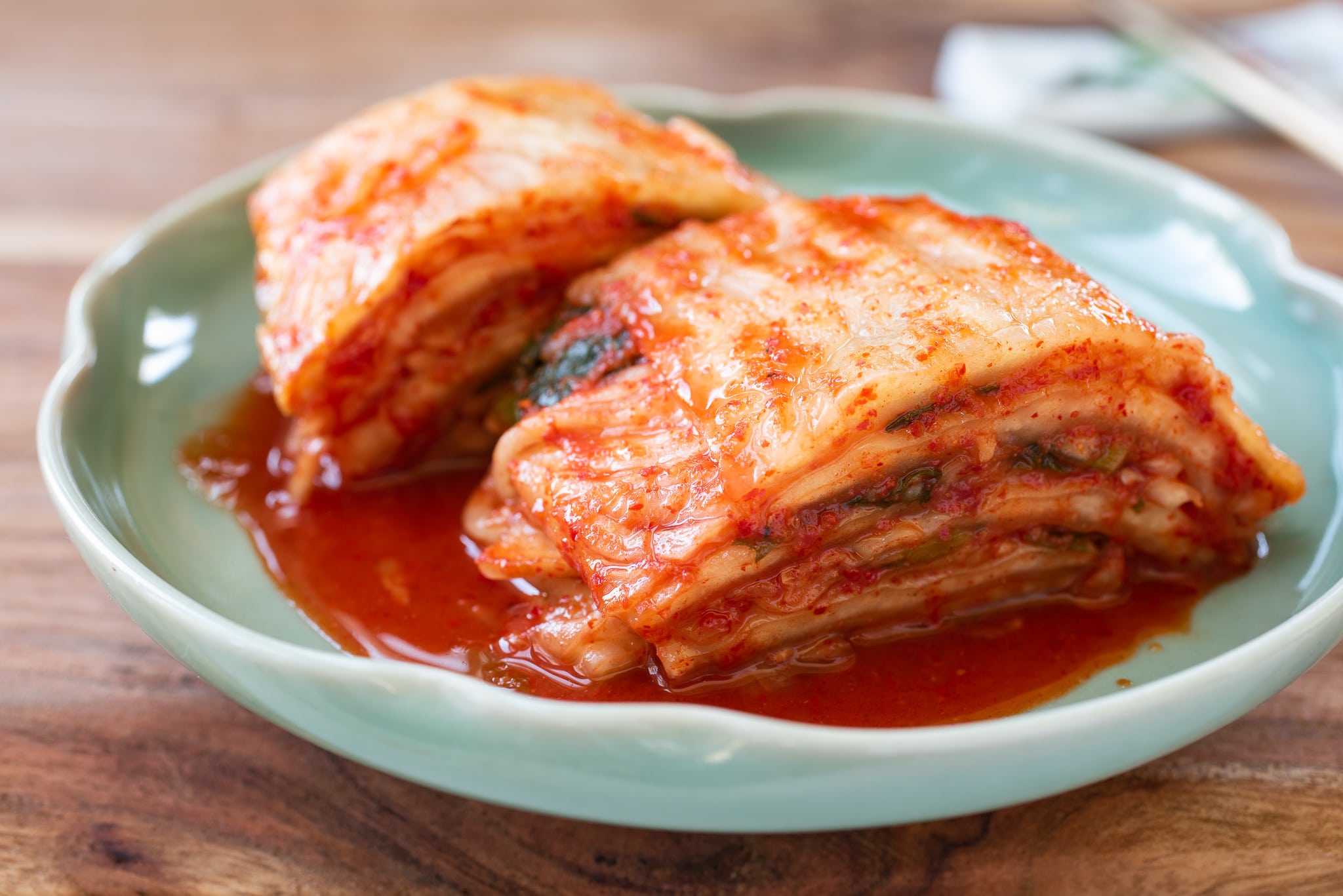
Everything you need to know about how to make kimchi! With this small batch recipe, you’ll find it not that difficult to make good authentic kimchi at home.
What is kimchi?
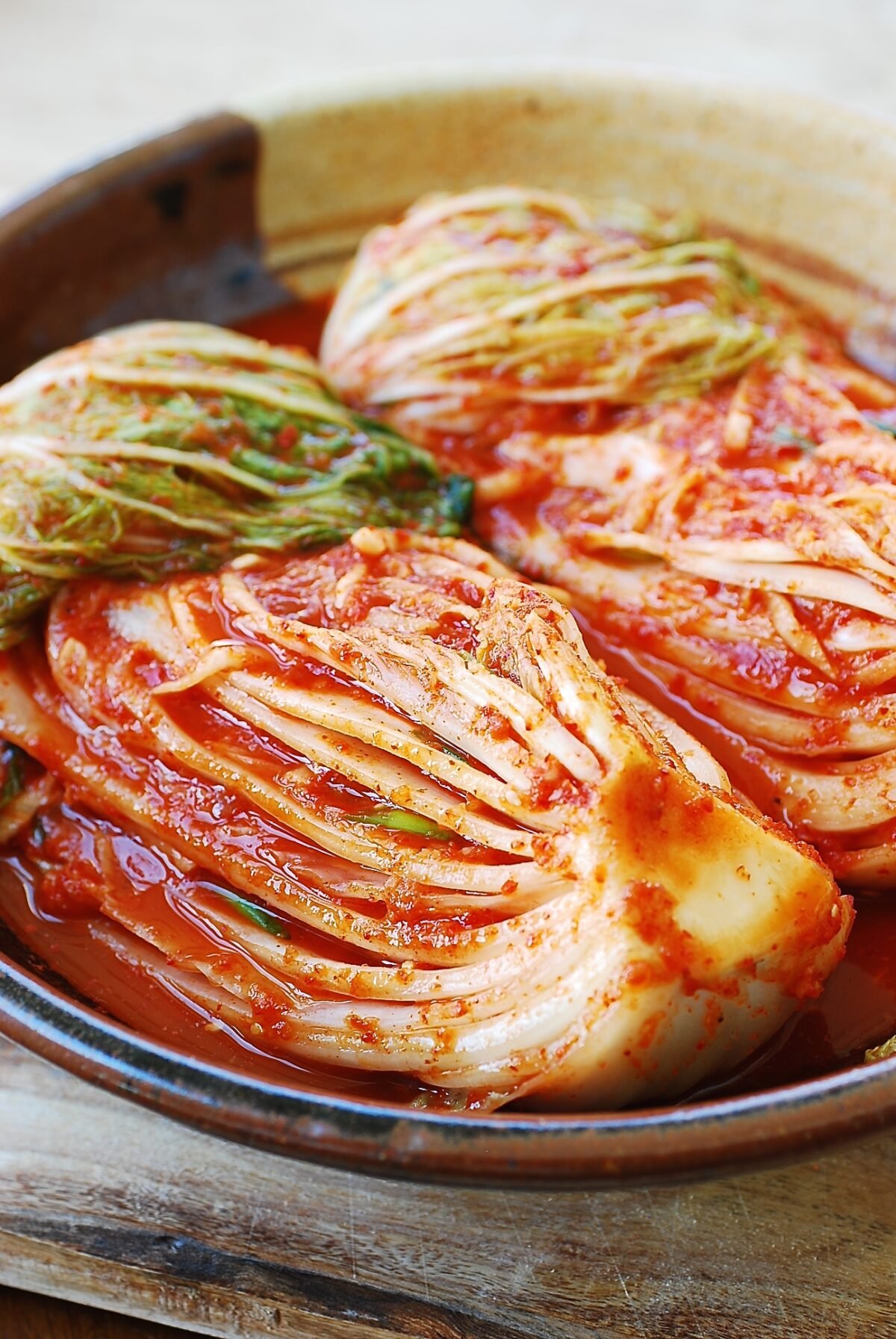
Kimchi (김치) is a collective term for vegetable dishes that have been salted, seasoned, and fermented. The its history goes back to ancient times. Originated from pickled vegetables, there are now hundreds of kimchi varieties in Korea. You can find some of the most common ones in my 15 easy kimchi recipes.
Over the last decade or so, Korean kimchi has gained a global recognition as a healthy probiotic food. It’s a good source of useful lactic acid bacteria, has excellent anti-oxidation and anti-cancer effects, and helps prevent aging.
This recipe is made with baechu (배추), known as napa cabbage, hence the name baechu kimchi. Because the cabbage is kept intact at its head, it’s also known as pogi kimchi (포기김치). Pogi means a “head” of a vegetable.
In late fall, Korean households make this type of kimchi in large quantity for their kimjang (or gimajang, 김장), an annual kimchi making event in preparation for cold months. I grew up watching my mother do her kimjang using over 100 cabbages with her friends in the neighborhood who rotated their schedules to help each other.
I usually make it with 5 – 10 heads (pogi) of cabbages at a time because we eat it every day. Also, I provide regular supply to my grown-up children. Both my mother and mother-in-law did that for us for a long time, so I am gladly continuing the tradition.
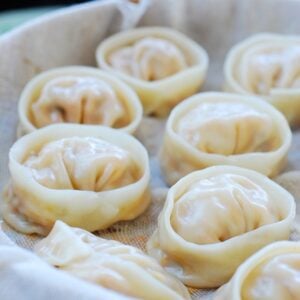
In Korean homes, there can never be too much of it. So many Korean dishes are made with well-fermented kimchi, such as jjigae, mandu, bibim guksu, kimchijeon, dubu kimchi, etc.
Buying napa cabbage (baechu)
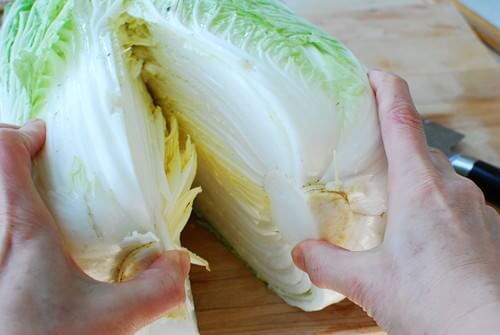
For this recipe, it’s best to use a medium to large cabbage that weighs around 5 to 5-1/2 pounds with some light green outer leaves. When cut, a good cabbage has a nicely straight white part that’s not too thick as well as bright yellow inner leaves.
Salt for kimchi
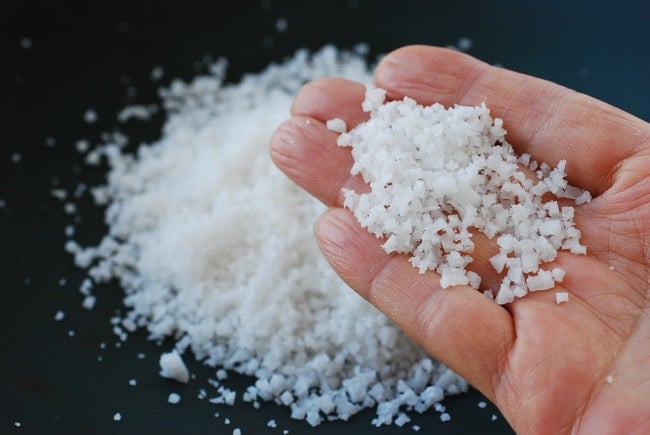
Korean coarse sea salt (cheonilyeom, 천일염) is the best to salt the vegetables to make kimchi. It’s natural salt with a coarse texture that’s minimally processed. Commonly referred to as gulgeun-sogeum (굵은소금), meaning coarse or thick salt, this salt tastes good without bitterness, so it helps develop flavors in fermented foods.
When we first came to America, Korean sea salt wasn’t available, so we used American table salt to salt cabbages. Be sure to use less (about 1/4 less than the amount called for in the recipe) if using fine salt.
Kimchi seasonings
The taste of kimchi varies widely, depending on the quality, type and ratio of the seasoning ingredients. Each Korean household has its own recipes, often driven by the regional flavors of their hometown. I find myself making it differently each time.
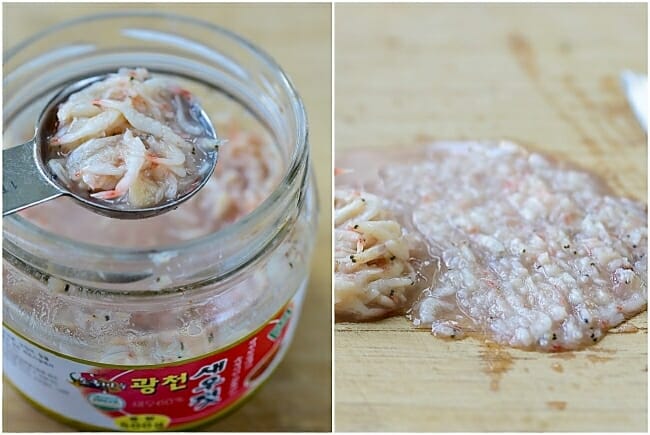
Good quality gochugaru makes a big difference in kimchi. In addition to gochugaru (고추가루, Korean red chili pepper flakes), garlic and ginger, kimchi recipes typically call for various jeotgal (젓갈, salted seafood) for the distinct pungency and depth of flavors and to aid the fermentation process. Saeujeot (새우젓, salted shrimp) and myulchiaekjeot (멸치액젓, fish sauce made with anchovies) are the most common ones. Read more about these ingredients in my Korean Pantry Seasoning Ingredients.
Sometimes, I also use fresh shrimp which is my mother’s secret ingredient for adding extra freshness to the kimchi flavor. If you can’t find saeujeot in your area, consider using some raw shrimp instead.
If you want to make vegan kimchi, skip shrimps and swap fish sauce with soup soy sauce (gukganjang, 국간장). Or simply check out my vegan kimchi recipe.
How to make kimchi
To help you start making kimchi at home, I came up with this recipe using one head of napa cabbage. Start with one, and then move to 2 or 3 by doubling or tripling the recipe.
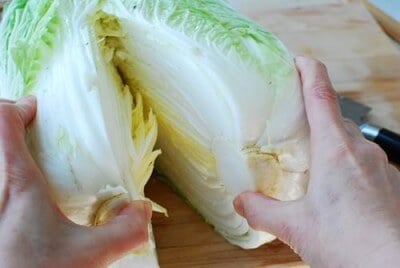
It typically starts with salting the main vegetable. For this pogi kimchi, you need to cut the whole cabbage in half lengthwise, and then into quarters. If you’re using 2 small cabbages, cutting in half should be enough.
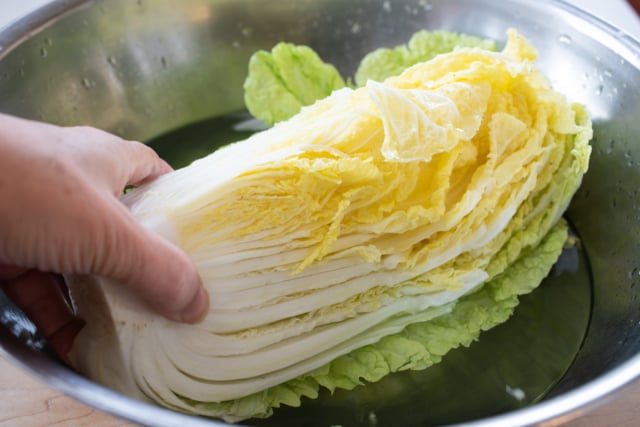
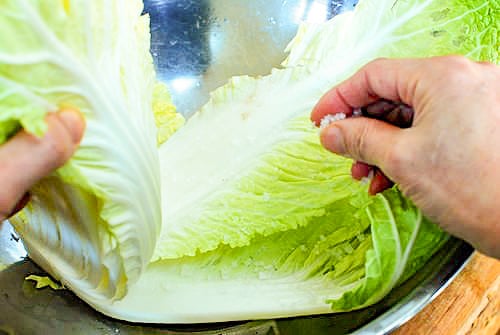
Then, thoroughly bathe each cabbage half/quarter in the salt water one at a time. Using the other half cup of salt, generously sprinkle salt over the thick white part of each leaf. This process makes sure the white parts get evenly salted,
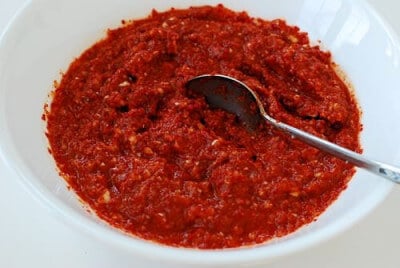
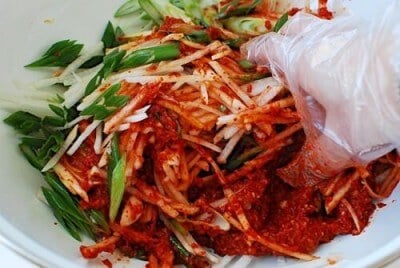
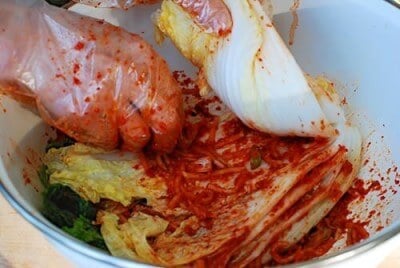
Meanwhile, make a kimchi paste by mixing all the seasoning ingredients, and then cut the radish into thin matchsticks and mix well with the paste. The rest is easy – rub a small amount of the radish mix over each cabbage leaf, mainly the white part.
How long does it last?
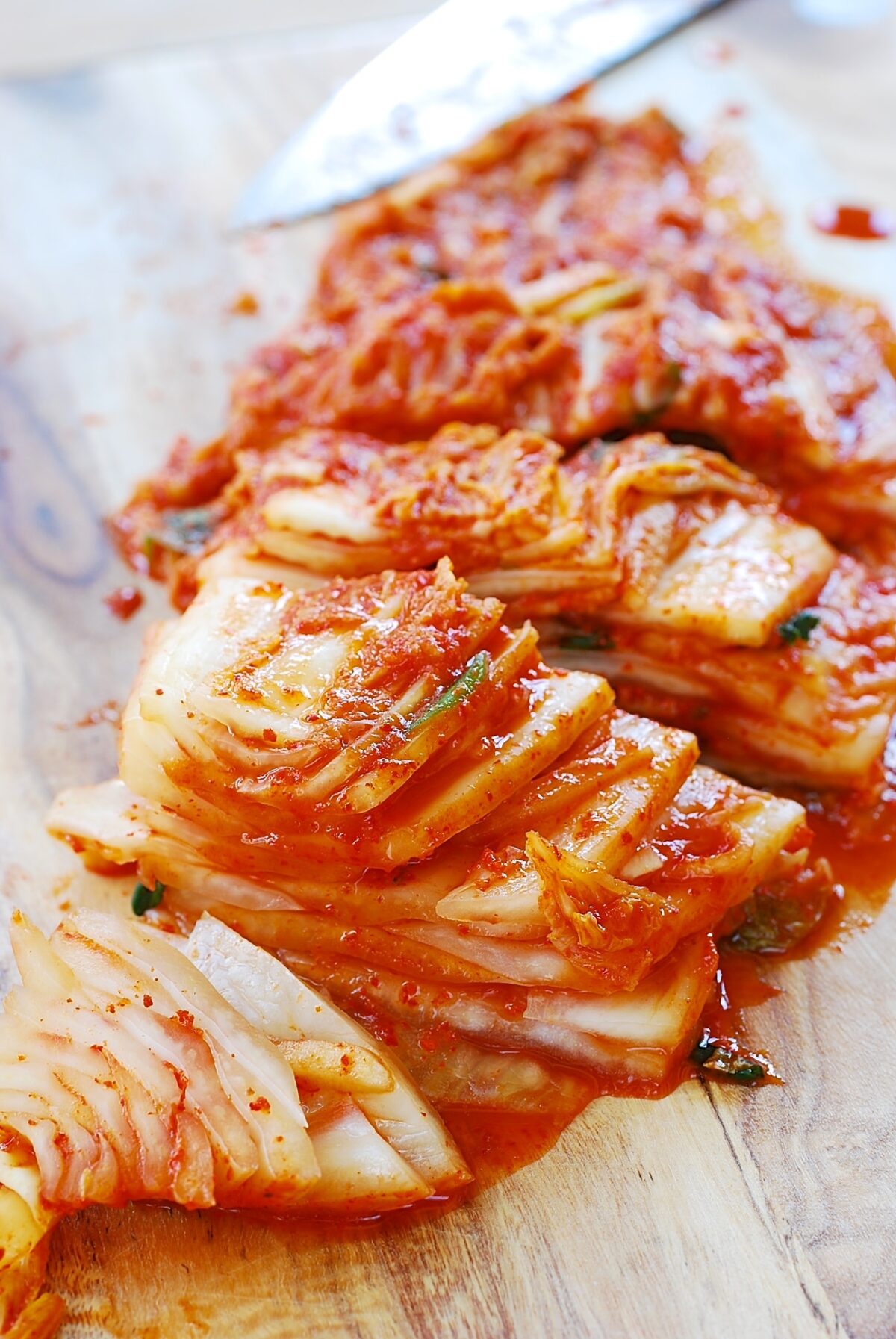
Although you can start eating your kimchi any time, it needs about two weeks in the fridge to fully develop its flavors. It will continue to age in your refrigerator and will be delicious for a couple of months, when the healthy bacteria count is the highest. It can last much longer than that, turning very sour over time.
Watch how to make it
More kimchi recipes
For more Korean cooking inspirations, follow along on YouTube, Pinterest, Twitter, Facebook, and Instagram.
Ingredients
- 1 large Napa cabbage, baechu (배추), about 5 to 6 pounds, or 2 small (about 3 pounds each)
- 1 cup Korean coarse sea salt, gulgeun soguem (굵은소금)
- 5 cups water
- 1 pound Korean radish, mu (무)
- 1/4 large Korean pear (배) optional
- 3 - 4 scallions
- 1 piece dasima, 다시마 (dried kelp), about 2 to 3 inch square) - optional
Seasonings
- 1 tablespoon glutinous rice flour, chapssal garu (찹쌀가루)
- 1/2 cup gochugaru, 고추가루 - adjust to taste
- 1/4 cup saeujeot, 새우젓 (salted and fermented shrimp), roughly chopped
- 3 tablespoons myulchiaekjeot, 멸치액젓 (fish sauce)
- 3 - 4 raw shrimps, about 2 ounces, finely minced or ground - optional
- 3 tablespoons minced garlic
- 1 teaspoon grated ginger
- 1/2 cup water or dasima broth
Kitchen tools
- 2 large bowls or pots 7 - 8 quarts
- a large colander
- kitchen gloves
- 3/4 - 1 gallon airtight container or jar
Instructions
- Cut the thick white part of the cabbage in half lengthwise. Then, slowly pull it apart to separate into two pieces. Do the same for each half to make quarters. Running the knife through all the way would unnecessarily cut off the cabbage leaves.

- In a large bowl, dissolve 1/2 cup of salt in 5 cups of water. Thoroughly bathe each cabbage quarter in the salt water one at a time, shake off excess water back into the bowl, and then transfer to another bowl.

- Using the other half cup of salt and starting from the outermost leaf, generously sprinkle salt over the thick white part of each leaf (similar to salting a piece of meat). Try to salt all the cabbage quarters with 1/2 cup salt, but you can use a little more if needed. Repeat with the rest of the cabbage quarters. Pour the remaining salt water from the first bowl over the cabbage. Set aside for about 6 - 8 hours, rotating the bottom ones to the top every 2 - 3 hours.
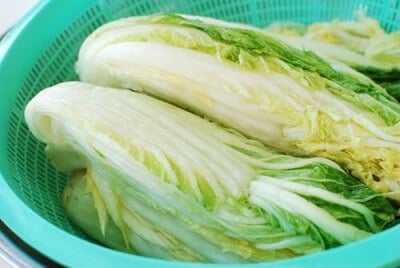
- The cabbages should be ready to be washed when the white parts of the leaves are bendable. It's okay to have a bit of resistance. Rinse thoroughly 3 times, especially between the white parts. Drain well, cut side down.
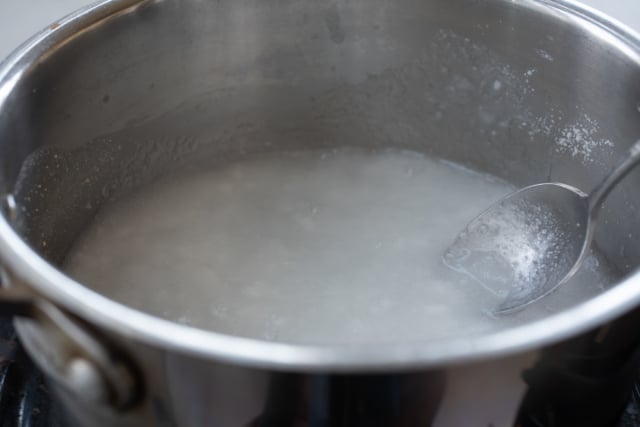
- Meanwhile, make the optional dasima broth by boiling a small piece (2 to 3 inch square) in 1.5 cups of water for 5 minutes, and cool. Mix the rice flour with 1/2 cup water (or optional dasima broth) and simmer over low heat, stirring occasionally, until it thickens to a thin paste, and cool. Yields about 3 - 4 tablespoons.
- Prepare the garlic, ginger and saeujeot. Combine all the seasoning ingredients, including the rice paste and about 1/2 cup water (or the optional dashima broth), and mix well. Set aside until the gochugaru dissolves slightly and becomes pasty.
- Cut the radish and optional pear into matchsticks (use a mandoline if desired), transferring to a large bowl. Cut the scallions diagonally into about 1-inch long pieces. Add the prepared seasoning mix to the radish, and mix well by hand. Throw in the scallions, and mix everything lightly. Taste a little bit. It should be a little too salty to eat as is. You can add salt, more salted shrimp or fish sauce, as needed. Let it sit for about 30 minutes to allow the flavors to meld nicely.
- Cut off the tough stem part from each cabbage quarter, leaving enough to hold the leaves together. Place one cabbage quarter in the bowl with the radish mix. Spread the radish mix over each leaf, one to two tablespoons for large leaves. (Eyeball the stuffing into 4 parts and use one part for each cabbage quarter.)
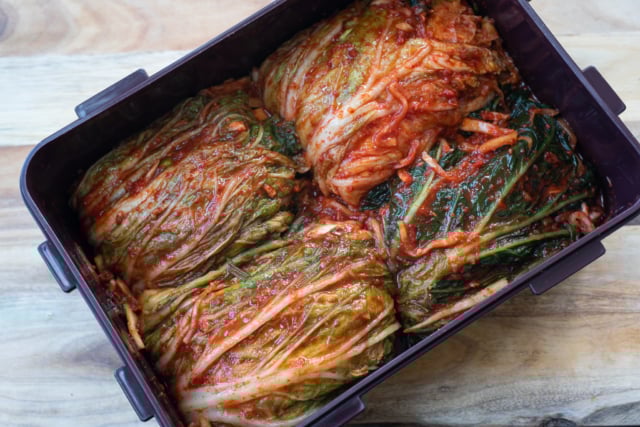
- Fold the leaf part of the cabbage over toward the stem and nicely wrap it with the outermost leaf. Place it, cut side up, in a jar or airtight container. Repeat with the remaining cabbages. If you have loose large leaves, you can use them to cover the top of the kimchi (see note 1). Once all the cabbages are in the jar or airtight container, press down hard to remove air pockets. To collect any remaining seasoning, rinse the bowl with 1/2 cup of water (or the remaining optional dasima broth), and add it to the kimchi container. Close the lid.
- Leave it out at room temperature for a full day or two. It can be longer, depending on the weather and how fast you want your kimchi to ripen. Then, store in the fridge. (see note 2)
Notes
- You can cover the top of the kimchi with large outer green leaves (as I did in the video) if available. Some people also use a plastic wrap to cover. But, this is not absolutely necessary, especially for this small batch of kimchi.
- Although you can start eating it any time, kimchi needs about two weeks in the fridge to fully develop the flavors. It maintains great flavor and texture for several weeks.