
• Skip to primary navigation
  • Skip to main content
  • Skip to primary sidebar
  • Skip to footer

Korean Bapsang logo

  • Start Here
  • Recipes
    • Appetizers
    • Main Dishes
      • Beef
      • Chicken
      • Pork
      • Seafood
    • Noodles and Rice
    • Side Dishes
    • Soups and Stews
    • Condiments and Sauces
    • Desserts/Sweets
    • Vegetarian/Vegan
    • Slow Cooker/Pressure Cooker
    • Kid-friendly/Mild Dishes
    • Traditional Holiday
      • Seollal (New Year’s Day)
      • Chuseok (Korean Thanksgiving)
  • Pantry
  • About
    • Privacy Policy
    • Featured On
    • Contact
  • Nav Social Menu

    • Facebook
    • Instagram
    • Pinterest
    • Twitter
    • YouTube
menu icon
go to homepage
search icon
Homepage link
  • Start Here
  • Recipes
  • Pantry
  • About
    • Facebook
    • Instagram
    • Pinterest
    • Twitter
    • YouTube
  • ×
    Home » Recipes

    Vegetable Broth for Korean Cooking

    Published 02/03/2019. Updated 01/18/2024

    Jump to Recipe

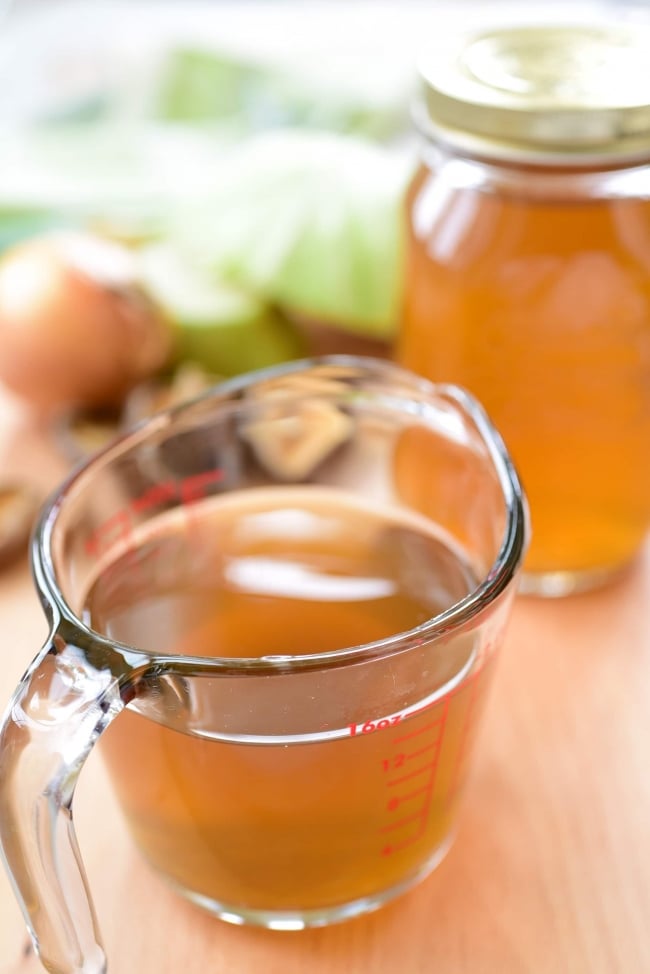
    Learn how to make Korean vegetable broth for your Korean soups and stews! It’s super easy to make and requires very few ingredients.
    DSC 2423 e1549253088496 - Vegetable Broth for Korean Cooking

    In my previous post, 15 Korean Vegan Recipes, I mentioned that many classic Korean dishes can easily be veganized. You can make the dishes like bibimbap or japchae vegan simply by omitting the meat and the egg. For soups and stews, you will need to substitute the meat or anchovy broth with vegetable broth. Here’s how to make Korean vegetable broth!

    Making Korean broth at home is really easy! More so with vegetable broth. It doesn’t take much time and requires very few ingredients.

    Ingredients for Korean vegetable broth

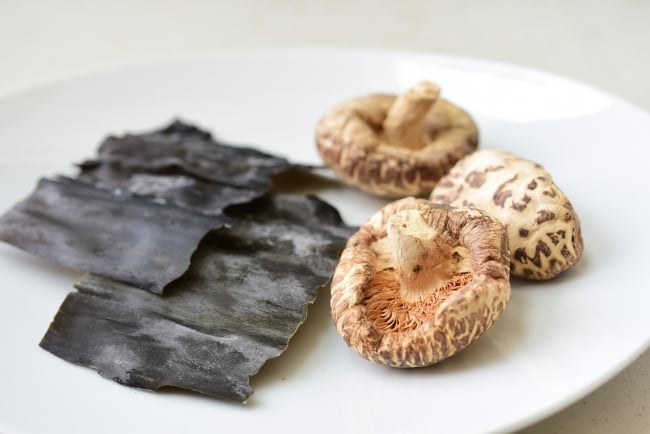
    Called chaesu (채수) in Korean, vegetable broth can be made with a variety of ingredients. However, there are a few basic vegetables that are typically used to make Korean broth. They are:

    • dried kelp (dasima,다시마, aka kombu)
    • dried shiitake mushrooms (pyeo-go beoseot, 표고버섯)
    • Korean radish (mu, 무)
    • large scallions (daepa, 대파)
    • onion
    • vegetable scraps (cabbage cores, mushroom stems, onion peels, carrot peels, etc.)

    For rich, flavorful vegetable broth, dried dasima and dried shiitake mushrooms are the two most important ingredients. They are good sources of glutamic acid, an amino acid responsible for savory taste and full of nutrients. If you make Korean food often, dried dasima and shiitake are must-haves in your pantry!

    Korean radish lends a refreshing taste to the broth, and scallions and onion add natural sweetness. You can also use vegetable scraps, such as cabbage cores, mushroom stems, onion peels, carrot peels, etc.

    In this recipe, I used several of the classic Korean broth ingredients. Sometimes, I only use dasima, and other times I also use shiitake mushrooms and more. It’s that versatile! Also, the amounts of vegetables in this recipe are only guidelines. You can certainly use more or less.
    DSC 2457 e1549253480735 - Vegetable Broth for Korean Cooking

    How to make vegetable broth

    Dasima (dried kelp) broth

    The simplest vegetable broth in Korean cooking is dasima broth. All it takes is a few minutes of boiling dasima pieces. To maximize the flavor, you can pre-soak the dasima for 20-30 minutes before boiling it. The white powder on the surface is the natural flavor enhancer, so don’t wash it off. You can dust off with a kitchen towel if needed.

    Dasima and mushroom broth

    Another option is to use dried shiitake mushrooms along with dasima. The resulting broth is quite rich and flavorful! This broth is very common in Korean temple cooking. Shiitake mushrooms are full of earthy, savory flavors, which intensify when dried. If you’re reconstituting dried mushrooms for another dish, the resulting liquid is good broth by itself. Save it to use in a sauce, soup or stew.

    To make the broth, you can pre-soak the mushrooms or simply boil longer if not pre-soaked. Dasima can be added in the beginning and removed after a few minutes or at the end with a few minutes of remaining. 

    Fully flavored vegetable broth

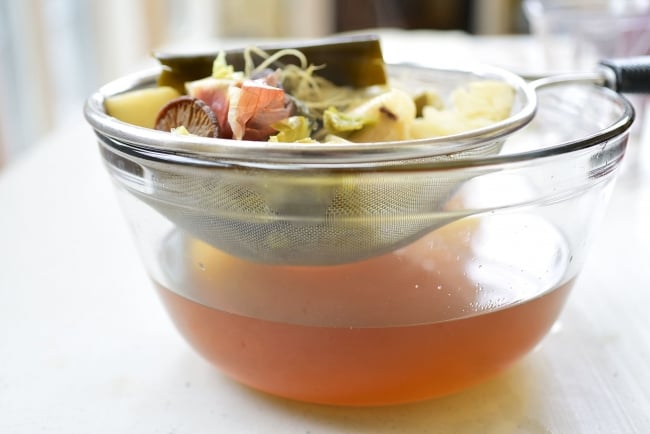
    For more depth and complexity, use Korean radish, large scallions, dried chili pepper flakes and/or vegetable scraps, such as cabbage cores, mushroom stems, onion peels, carrot peels, etc.

    I used this batch to make vegan doenjang jjigae and baechu doenjang guk. They were delicious! This can be a base for many other Korean recipes, in place of the meat or anchovy broth, such as manduguk, tteokguk, kongnamul guk, mu guk, kimchi jjigae, soondubu jjigae, jjambbong, gyeranjjim, and janchi guksu.
    DSC 2408 e1549253804137 - Vegetable Broth for Korean Cooking

    For more Korean cooking inspirations, follow along on YouTube, Pinterest, Twitter, Facebook, and Instagram.
    DSC 2423 e1549253088496 300x300 - Vegetable Broth for Korean Cooking

    Vegetable Broth for Korean Cooking

    4.60 from 5 votes
    Soup
    Prep Time: 5 minutes minutes
    Cook Time: 30 minutes minutes
    Total Time: 35 minutes minutes
    Servings: 4
    Print Recipe

    Ingredients

    • 2 pieces dashima about 4-inch square each
    • 2 to 3 dried pyogo beoseot (표고바섯, shiitake mushrooms)
    • 1/2 medium onion cut into chunks
    • 6 ounces Korean radish cut into chunks
    • 2 scallions 1 if using large one (daepa, 대파)
    • 3 to 4 ounces green cabbage cores and leaves
    • 2 dried red chili peppers or 1 teaspoon peppercorns - optional

    Instructions

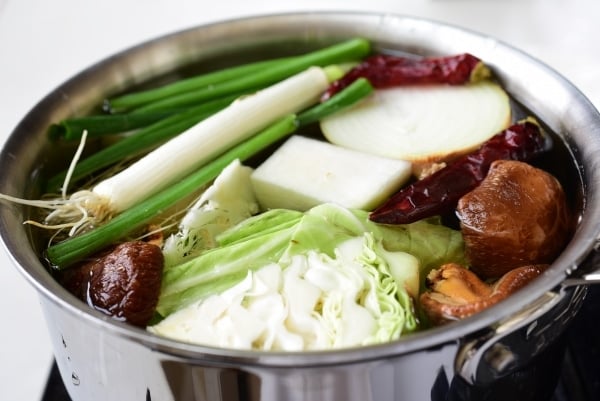
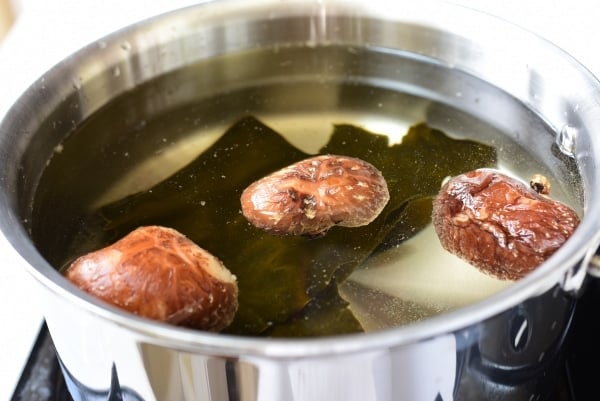
    • Soak the dashima and shiitake mushrooms for about 30 minutes in a large pot with 10 cups of water. You can skip soaking if you don’t have time, but soaking maximizes the flavor of the broth. 
      DSC 2365 600x401 - Vegetable Broth for Korean Cooking
    • Add the other vegetables you're using to the pot. 
      DSC 2372 600x401 - Vegetable Broth for Korean Cooking
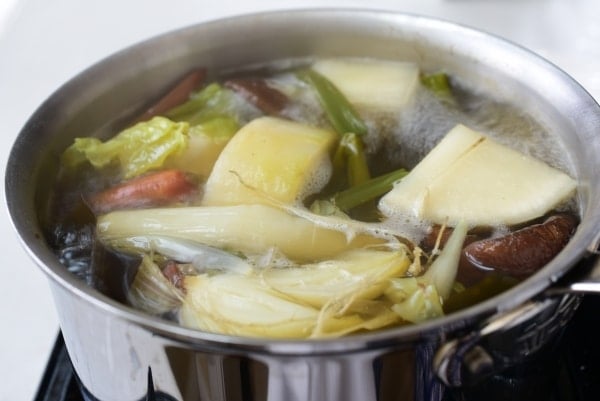
    • Bring it to a boil over high heat and boil, covered, for 10 minutes. Remove the dashima. Reduce the heat to medium, and continue to boil, for about 20 minutes. Turn the heat off. Let the broth cool.
      DSC 2390 600x401 - Vegetable Broth for Korean Cooking
    • Pour the broth through a strainer into a large bowl. Press the vegetables with a spoon or spatula to squeeze out any remaining broth.
    • Store the broth in the fridge up to a week, or in the freezer up to 2 months.
    Tried this recipe?Mention @koreanbapsang or tag #koreanbapsang!

    You may also like:

    • DSC 0073 e1471728326371 300x300 - Vegetable Broth for Korean Cooking
      Sukju Namul (Seasoned Mung Bean Sprouts)
    • DSC3614 300x300 - Vegetable Broth for Korean Cooking
      Hobak Jeon (Pan-fried Zucchini in Egg Batter)
    • DSC 0049 1024 e1690924639259 300x300 - Vegetable Broth for Korean Cooking
      Cucumber Kimchi (Oi Kimchi)
    • DSC8723 300x300 - Vegetable Broth for Korean Cooking
      Maekjeok (Doenjang Marinated Pork)
    « Kimchi Mandu (Kimchi Dumplings)
    Tteok Mandu Guk (Rice Cake Soup with Dumplings) »
    924 shares
    • Share
    • Tweet
    • Email

    Reader Interactions

    Comments

    1. Chez says

      May 07, 2022 at 5:12 am

      Hello Mrs Hyosun,
      I just wanted to ask for some substitutes since we don’t get those type of specific ingredients here where I live, not nearby anyway. I know it won’t give the exact flavour but could you help?
      Where we live we don’t get dashima, Korean radish, or shiitake mushrooms. Do you know any good substitutes? Would regular radishes be any good, or regular mushrooms?
      Thank you again!
      -Chez
      🙂

      Reply
      • Hyosun says

        May 11, 2022 at 5:19 pm

        oh sorry about the late response. You can use any vegetables which are common in other cuisines, such as carrot, celery, other dried mushrooms, etc.

        Reply
    2. Kimy says

      July 07, 2020 at 5:12 am

      Hiii,
      I love your recipes and your inclusiveness to having vegetarian options. Just wondering what can you do with the vegetables after you made the broth?

      Reply
      • Hyosun says

        July 07, 2020 at 10:05 pm

        They are pretty tasteless after, but you can reuse mushrooms and dashima in the dishes you’re using the broth for a texture and fiber.

        Reply
    3. Kam says

      June 21, 2019 at 10:20 pm

      This is Korean and vegetarian..so no it’s not missing it. Korean stock doesn’t use katsuobushi anyway, it uses anchovies.

      Reply
    4. Mark says

      February 22, 2019 at 4:06 am

      Close to dashi. Missing katsuobushi.

      Reply
      • Hyosun says

        October 08, 2019 at 12:34 am

        Oh i missed your comment, but KAM correctly replied. See her comment.

        Reply
    4.60 from 5 votes (5 ratings without comment)

    Leave a Reply Cancel reply

    Your email address will not be published. Required fields are marked *

    Recipe Rating


    Primary Sidebar

    Welcome to Korean Bapsang

    Korean Bapsang Author
    Hi! I'm Hyosun, and I am a Korean-American mom of two wonderful grown-up children. Here, you will learn how to cook Korean dishes the way we Koreans traditionally eat at home. Read More...

    Never Miss a Recipe

    Trending Recipes

    • Spicy pork bulgogi served with lettuce wraps and ssamjang Jeyuk Bokkeum (Spicy Pork Bulgogi) 39.7k views

    • A 6-photo collage of 15 Korean vegetable side dishes 15 Vegetable Side Dishes (Banchan) 38.9k views

    • Korean beef short ribs in a plate with lettuce in the background LA Galbi (Korean BBQ Short Ribs) 30k views

    • Spicy Cucumber Side Dish Oi Muchim (Spicy Cucumber Salad) 29.8k views

    • Holding up a round Korean honeycomb sugar candy with an umbrella imprint Dalgona (Korean Sugar Candy) 29.4k views

    • Doenjang jjigae (Korean soybean paste stew) Doenjang Jjigae (Soybean Paste Stew with Pork and Vegetables) 29.1k views

    As Featured On:


    Footer

    Korean Bapsang New Logo

    • Facebook
    • Instagram
    • Pinterest
    • Twitter
    • YouTube

    Copyright © 2025 · All rights reserved · Korean Bapsang

    Rate This Recipe

    Your vote:


    A rating is required
    A name is required
    An email is required

    Recipe Ratings without Comment

    Something went wrong. Please try again.